Uncover the hidden history of Edinburgh Castle through the fascinating world of historic graffiti, mason\'s marks, and soldier carvings. Explore the personal stories etched into the fortress walls across centuries.
When we walk through the ancient gates of a historic fortress, our eyes are naturally drawn to the towering battlements and grand architectural feats. Yet, if you lean in closer and let your fingertips trace the rough-hewn walls, a completely different narrative begins to unfold. Hidden in plain sight across the sprawling complex of Edinburgh Castle are countless carved initials, intricate mason’s marks, and poignant soldier graffiti etched into the stone. These silent witnesses offer a deeply personal glimpse into the past, bypassing the official chronicles to reveal the everyday lives, enduring boredom, and fleeting hopes of those who lived, worked, and fought here over the centuries. As you wander through the grounds this April 2026, the crisp spring air seems to carry the whispers of these forgotten individuals, inviting you to look beyond the obvious and discover the fortress's hidden canvas.
Decoding the Stones: What Do the Markings Mean?
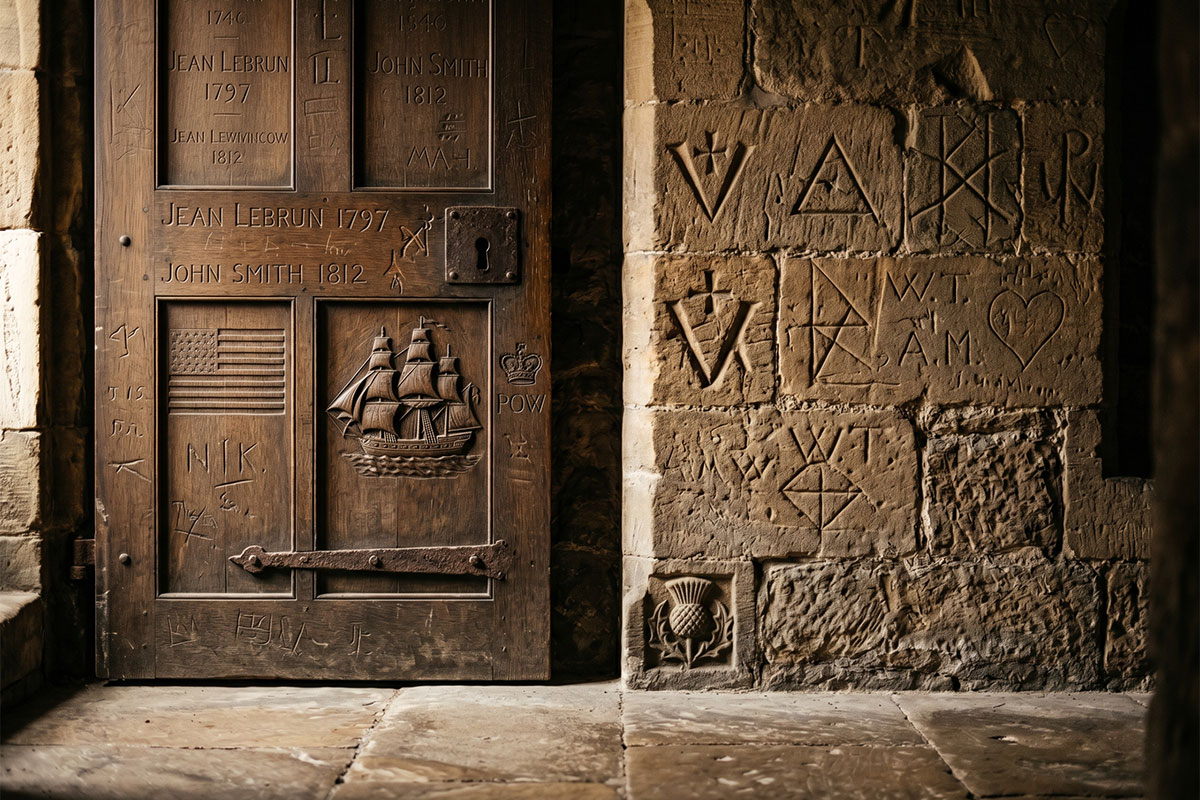
To the untrained eye, the scratches and symbols adorning the fortress walls might look like mere damage or modern vandalism. However, these historic etchings are actually a complex language of their own. They serve as a tangible connection to the individuals who shaped The Story of Edinburgh Castle. From the proud signatures of medieval stonemasons to the desperate tallies of prisoners of war, each mark carries a specific purpose and history. Understanding these carvings allows us to read the castle walls like an open book, translating centuries of human experience into a relatable narrative. Below is a guide to help you decode the most common types of markings you will encounter during your exploration.
| Type of Marking | Typical Appearance | Historical Meaning and Purpose |
| Mason’s Marks | Geometric shapes, intersecting lines, triangles, or stylized crosses. | Used by stonemasons as a personal signature to claim their work and ensure they received proper payment from the master builder. |
| Soldier Initials & Dates | Crude letters, numbers, and years (e.g., "J.M. 1745"). | Carved by garrisoned troops during long, monotonous hours of guard duty to leave a permanent record of their deployment. |
| Prisoner Etchings | Detailed ships, tally marks, national symbols, or names. | Created by prisoners of war as an act of resilience, marking the passage of time and preserving their identity in captivity. |
| Regimental Badges | Crests, military emblems, or specific unit numbers. | Carved to show pride in a specific military unit stationed at the castle, often found near barracks or defensive positions. |
The Master Builders: Mason’s Marks Across the Fortress
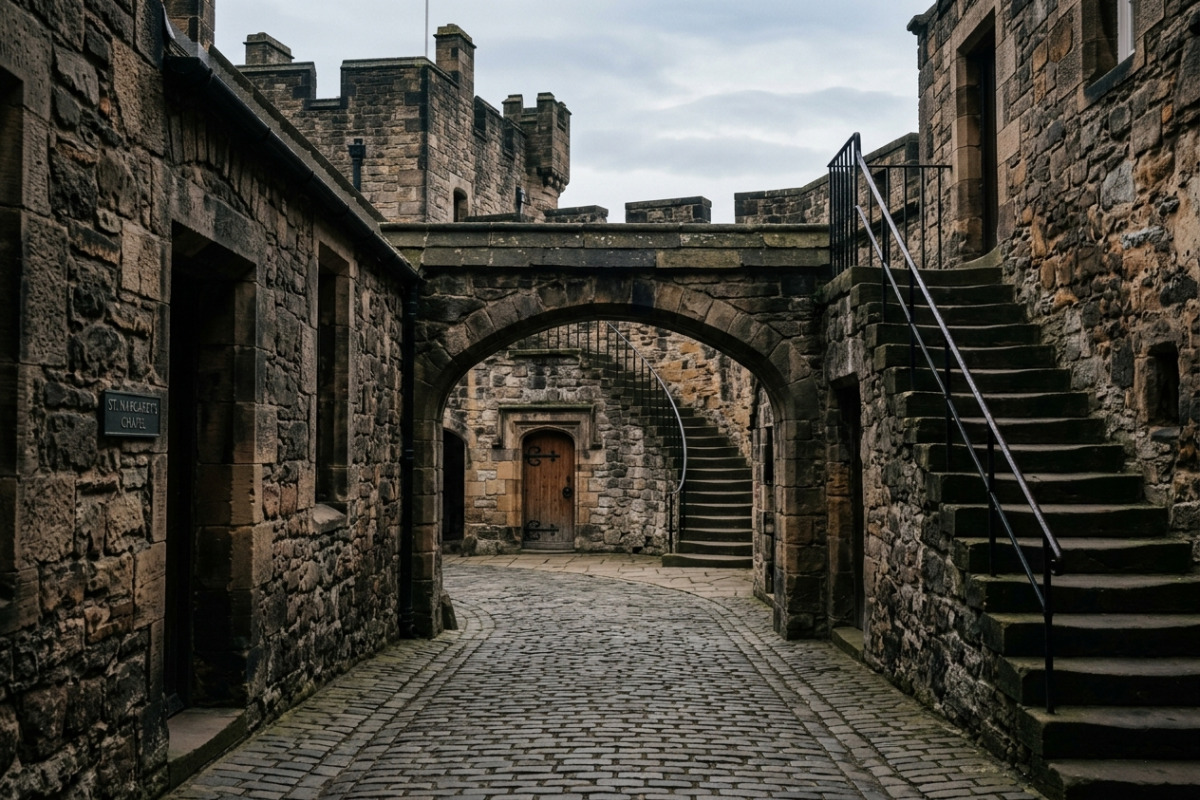
Long before the era of digital blueprints and corporate branding, medieval stonemasons used unique geometric symbols to claim their work and ensure they were paid correctly. These mason's marks are essentially the ancient equivalent of a craftsman’s signature. As you wander through the oldest parts of the fortress, such as the beautifully preserved St Margaret's Chapel, you can spot these subtle geometric shapes—triangles, intersecting lines, and crosses—carved meticulously into the sandstone. The precision required to leave such deliberate marks without damaging the structural integrity of the stone is a testament to their incredible skill.
Finding these marks gives you a profound appreciation for the human labor that went into constructing these monumental structures. When admiring the magnificent architecture of The Great Hall, built for King James IV around 1511, taking a moment to look for these subtle signatures connects you directly to the anonymous artisans of the 16th century. They did not just build walls; they left a permanent piece of their identity embedded in the very foundation of Scotland’s most iconic stronghold. Their legacy lives on not just in the grandeur of the halls, but in the tiny, deliberate scratches that have survived hundreds of brutal Scottish winters.
Echoes of Warfare: Soldier Graffiti and Prisoner Inscriptions
While masons left their marks out of professional pride, soldiers and prisoners left theirs out of necessity, boredom, or despair. The fortress has seen countless conflicts, and its walls have housed garrisons of troops as well as prisoners from various international wars, including the American War of Independence and the Napoleonic Wars. In the damp, shadowed corners of the castle's lower vaults and historic guardrooms, you will find a fascinating array of military graffiti that speaks volumes about the psychological toll of fortress life.
Tracing Personal Stories in the Stone
Soldiers stationed at the fortress often faced long, monotonous hours of guard duty, staring out into the misty horizon. To pass the time, they carved their initials, regiment numbers, and the dates of their deployment into the stone. Around areas like Crown Square, which has been the ceremonial and administrative heart of the castle for over 500 years, sharp-eyed visitors can spot the faint remnants of these personal records. These simple carvings transform nameless guards into real people who once stood exactly where you are standing, feeling the same biting wind and experiencing the same longing for home.
Prisoner graffiti is perhaps the most moving of all the historic etchings found within the complex. Captured sailors and soldiers held in the fortress vaults carved intricate depictions of ships, dates of their capture, and symbols of their homelands. These etchings were acts of profound resilience, a way to maintain their sanity and identity in the face of grim captivity. When you reflect on these poignant carvings, a visit to the Scottish National War Memorial becomes even more impactful, as it bridges the gap between the monumental sacrifices of the 20th century and the quiet, individual struggles of earlier eras.
Everyday Life Revealed Through Etchings
The historic graffiti scattered throughout the castle does more than just record names and dates; it provides a vivid window into the everyday life of the fortress. By examining the location and nature of these marks, historians and archaeologists can piece together how different spaces were utilized by the people who lived there. For example, carvings found near the grand The Royal Palace often differ dramatically in style and content from those discovered near the utilitarian defensive batteries. The proximity to royalty often inspired more formal or deliberate carvings, whereas the outer walls feature rougher, more hurried scratches.
Even near formidable siege weapons like Mons Meg, you can sense the lingering presence of the artillerymen who maintained and fired these massive guns. The walls tell rich stories of camaraderie, intense rivalry between different regiments, and the simple, universal human desire to be remembered long after one has gone. To fully grasp the breadth and depth of these historical echoes, it is highly recommended to Explore Our Sections comprehensively, as each unique area of the castle holds its own specific collection of hidden inscriptions waiting to be deciphered.
How to Find These Hidden Gems During Your Visit
Hunting for historic graffiti adds a thrilling layer of discovery to your castle exploration, transforming a standard tour into a personal treasure hunt. It requires patience, a keen eye, and an appreciation for the smaller details that many visitors simply walk past without a second glance. Here are a few practical tips to help you uncover these incredible marks in stone during your journey:
- Look low and high: Masons typically left marks exactly where they laid the stones, which could be near the floor or high up on an archway, while soldiers carved at eye level or wherever they sat during guard duty.
- Use the natural light: Early morning or late afternoon sunlight creates long shadows that make faint, time-worn carvings much easier to spot against the rough stone.
- Check the doorways and window frames: These specific areas were prime real estate for bored guards looking to leave their initials while keeping an eye out for approaching officers.
- Review our guidelines: Before you arrive, take a moment to check the Visiting Information page to effectively plan your route through the most historic and inscription-rich sections.
- Ask an expert: If you have questions about a specific symbol or carving you find, reviewing the Frequently Asked Questions section or speaking to a knowledgeable guide on-site can offer invaluable insights.
The stones of this magnificent fortress are not silent; they are constantly speaking, provided we take the time to slow down and truly listen. Every scratch, initial, and geometric shape is a breadcrumb left behind by someone who walked these very paths centuries ago. If you are ready to trace the footsteps of kings, prisoners, master masons, and ordinary soldiers, Book Your Castle Experience today and prepare to uncover the deeply human stories permanently etched into the very fabric of Scottish history.
Enjoyed this article?
Share it with friends and fellow castle enthusiasts.