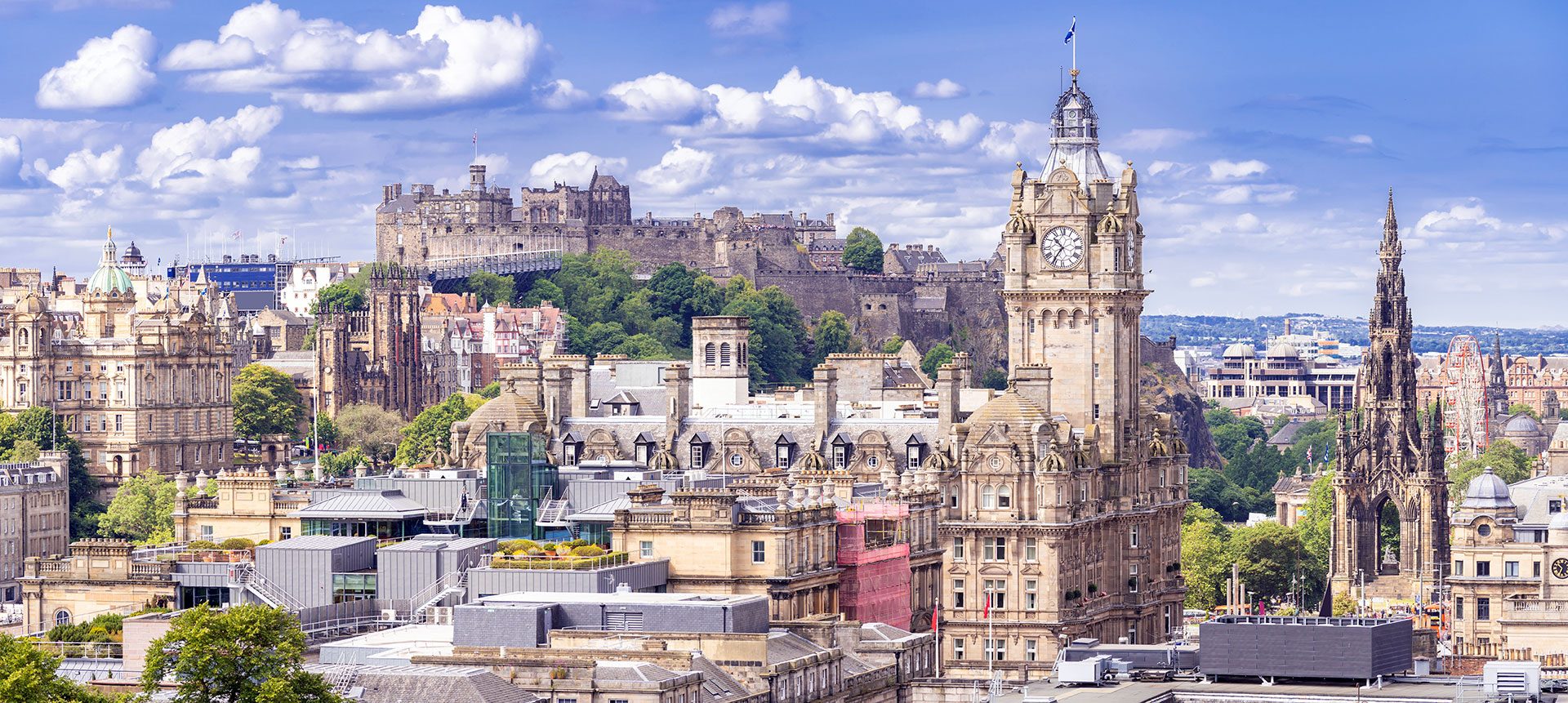
Edinburgh Castle

Visitor Guide

Frequently Asked Questions

Everything you need to know about Edinburgh Castle

Opening Hours

Summer: 9:30am – 6pm
Winter: 10am – 4pm

Location

Castle Rock, Royal Mile
Edinburgh EH1 2NG

Visit Duration

Allow 2–3 hours
to explore fully

About the Castle

Castle Rock has been occupied since at least the Iron Age (around 900 BC). The oldest surviving building is St Margaret's Chapel, dating from the early 12th century. The castle as we see it today was largely shaped between the 14th and 17th centuries.
Edinburgh Castle has been a royal residence, military garrison, prison, and treasury. It housed the Scottish Crown Jewels, witnessed the birth of James VI, and was at the heart of Scotland's Wars of Independence.
The Honours of Scotland are the Scottish Crown Jewels—the oldest regalia in Britain. They consist of the Crown, Sceptre, and Sword of State, displayed alongside the Stone of Destiny in the Crown Room within the Royal Palace.
Since 1861, a gun has been fired from the castle every day at 1pm (except Sundays, Good Friday, and Christmas Day). Originally, it helped ships in the Firth of Forth set their maritime clocks. Today, it remains a beloved Edinburgh tradition.

Planning Your Visit

The castle is located at the top of the Royal Mile, a 10–15 minute walk uphill from Waverley Station. City buses stop nearby on Princes Street and George IV Bridge. There is no parking at the castle, but public car parks are available in the city centre.
Most visitors spend 2–3 hours at the castle. This allows time to see the Crown Jewels, St Margaret's Chapel, the Great Hall, the Scottish National War Memorial, and the Prisons of War exhibition.
For fewer crowds, arrive early in the morning or late afternoon. Weekdays are generally less busy than weekends. The castle is busiest between 11am and 2pm, especially during summer.
The castle has the Redcoat Café serving hot and cold refreshments, sandwiches, and snacks. There is also a Tea Room offering more premium options.
Wear comfortable shoes—the castle has steep hills, steps, and cobblestones. Edinburgh weather is unpredictable, so layered clothing and a waterproof jacket are recommended.

Accessibility

Due to its historic nature and hilltop location, the castle has limited accessibility. However, wheelchairs are available to borrow free of charge, and a courtesy vehicle can transport visitors with mobility needs to the upper areas. Many key attractions, including the Crown Jewels, are accessible.
Only registered assistance dogs are permitted inside the castle. Pet dogs are not allowed. Water bowls for assistance dogs are available at the café.
Yes, audio guides are available in multiple languages including English, German, French, Spanish, Italian, Japanese, Mandarin, and Scottish Gaelic. Audio description versions are also available for visitors with visual impairments.

History & Facts

The castle was built over many centuries by different Scottish kings. David I built St Margaret's Chapel in the 12th century. David II built David's Tower in the 14th century. James IV constructed the Great Hall in the early 16th century.
Yes, Edinburgh Castle has been besieged and captured many times. It changed hands repeatedly during the Wars of Scottish Independence. In 1314, Thomas Randolph famously recaptured it by scaling the cliffs with just 30 men. The last siege was in 1689.
Edinburgh Castle is part of the Edinburgh Old and New Towns UNESCO World Heritage Site, inscribed in 1995. The site recognises the outstanding universal value of Edinburgh's historic urban landscape.
Mons Meg is a famous medieval siege cannon, one of the largest in the world. It was made in Belgium in 1449 and given to James II of Scotland. It could fire stone balls weighing up to 150kg over a distance of 3.2km.

Learn More About the Castle

Discover the rich history and fascinating stories of Scotland's most iconic landmark.

Explore History Castle Sections
Buy Tickets