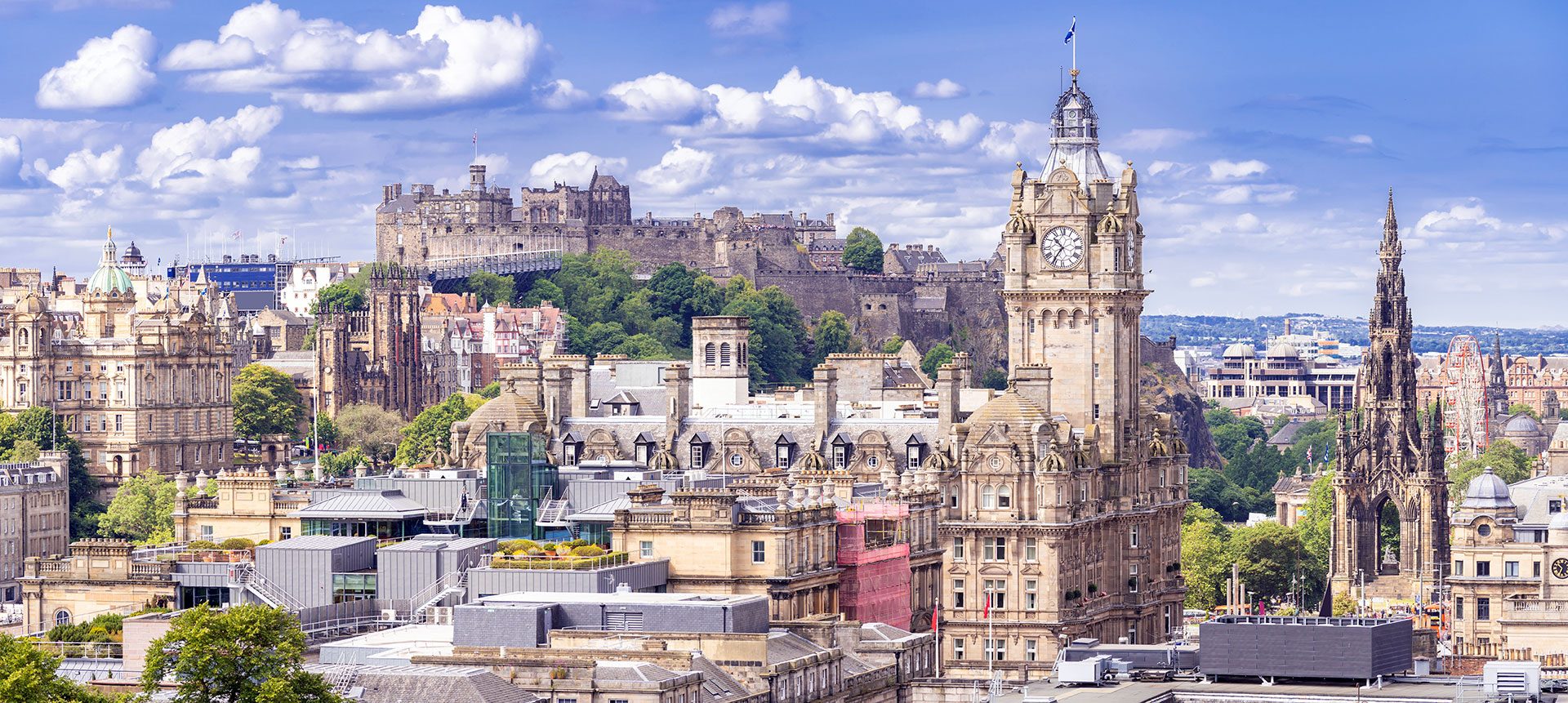
Over 900 Years of History
The Story of Edinburgh Castle
From Iron Age fort to royal palace to military garrison – discover the stories behind Scotland's most iconic fortress.
Over 900 Years of History
From Iron Age fort to royal palace to military garrison – discover the stories behind Scotland's most iconic fortress.
A Living Legacy
Edinburgh Castle stands as one of the most remarkable strongholds in European history. Through centuries of warfare, royal celebrations, and political intrigue, it has witnessed Scotland's most dramatic moments.
From its origins as an Iron Age hill fort to its present role as Scotland's premier visitor attraction, the castle has served as royal residence, military garrison, prison, and treasury. Today, walking its cobbled paths means following in the footsteps of kings, queens, warriors, and even the occasional pirate.
Did you know? Edinburgh Castle holds the distinction of being the most besieged place in all of Britain.
The Early Years
The castle's story begins in prehistory, when Iron Age settlers first recognised the strategic advantage of Castle Rock. Rising dramatically from the landscape, this volcanic plug offered natural defences that made it an ideal location for a stronghold.
Early medieval poetry tells of warriors who made this their base, feasting within its walls for a year before riding out to meet their fate in battle. The rock has been continuously occupied for nearly three millennia.
During the fierce struggles between Scotland and England, the castle changed hands numerous times. In 1296, Edward I of England captured the fortress. But in 1314, Scottish forces reclaimed it in a daring nighttime assault led by Thomas Randolph, nephew of Robert the Bruce.
In 1457, King James II received Mons Meg, one of the greatest siege cannons ever forged. This formidable weapon could launch stones weighing 150kg. Today, visitors can still marvel at this engineering masterpiece.
Crown & Ceremony
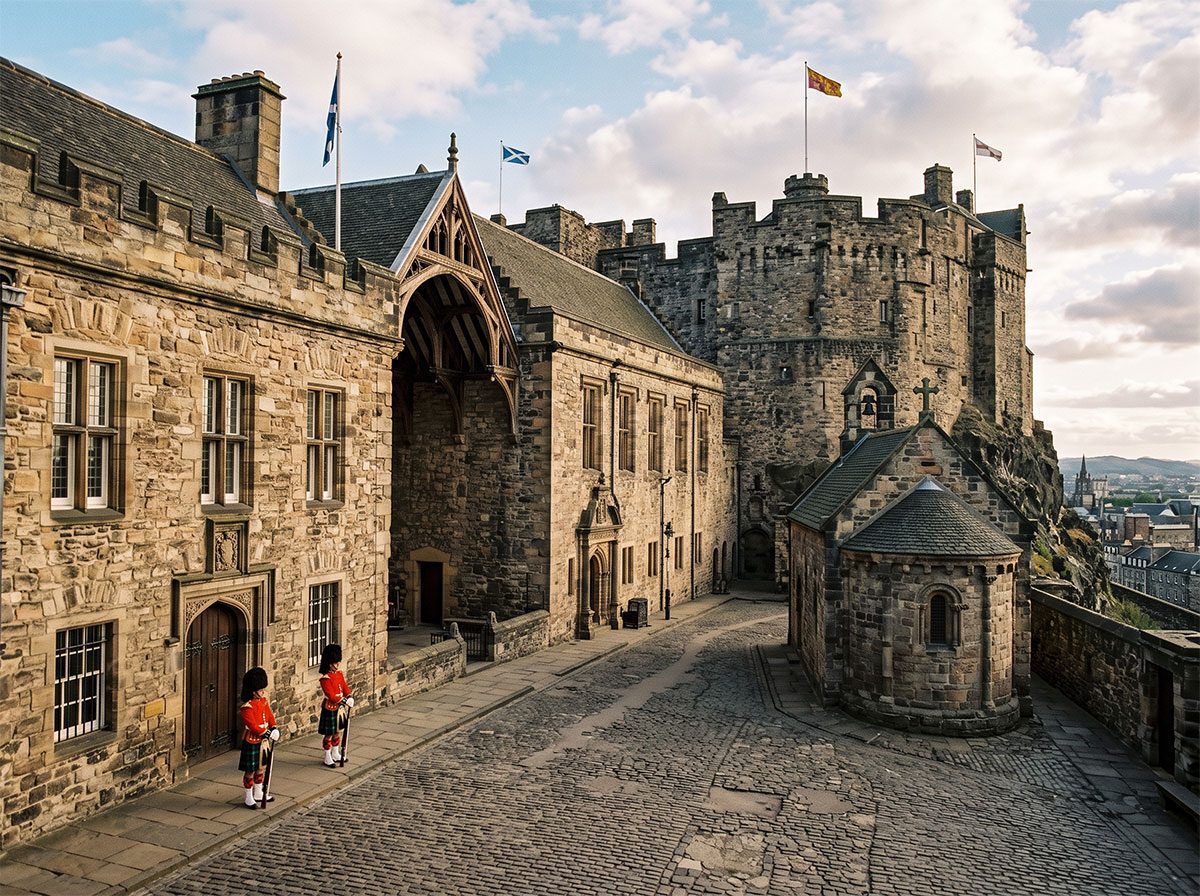
Britain's oldest Crown Jewels are housed within these walls. Crafted in Scotland and Italy, the crown, sceptre, and sword of state first came together for a coronation in 1543.
For centuries, Edinburgh Castle served as the home of Scottish monarchs. Queen Margaret, later canonised as a saint, died within these walls in 1093. Her son, King David I, honoured her memory by building St Margaret's Chapel.
The magnificent Great Hall, completed in 1511 for King James IV, witnessed lavish banquets and state ceremonies beneath its original hammerbeam roof.
In 1566, Mary Queen of Scots gave birth here to the future James VI, who would later unite the crowns of Scotland and England.
Wartime Secret: During World War II, the Crown of Scotland was hidden from potential enemy capture—buried in a medieval toilet chamber within David's Tower!
Soldiers & Prisoners
After 1603, Edinburgh Castle evolved into one of Britain's most important military installations. The Jacobite Risings of 1689–1746 prompted major defensive upgrades.
Between 1757 and 1814, hundreds of prisoners of war were held in the dark vaults beneath Crown Square. The first arrivals were French privateers captured in 1758.
Great Escape: In 1811, 49 French prisoners hacked through a castle wall and used ropes to descend the sheer south crag. All but one made it to freedom.
Military surveyor William Roy begins mapping Scotland from the castle, laying groundwork for Ordnance Survey.
The One O'Clock Gun tradition begins, helping ships in the Forth set their chronometers.
Luftwaffe pilots shot down over the Firth of Forth are brought to the castle's military hospital.
Through the Ages
King David I builds the chapel in memory of his mother, Queen Margaret. It remains Edinburgh's oldest surviving building.
Edward I captures the castle, beginning a period of English occupation. The castle changes hands multiple times.
Thomas Randolph leads a daring night raid to recapture the castle for Scotland.
The famous siege cannon is gifted to James II. It could fire stones weighing 150kg.
Mary Queen of Scots gives birth to the future James VI of Scotland and I of England in the Royal Palace.
One of the longest sieges in the castle's history ends with significant destruction to the fortifications.
Sir Walter Scott leads the reopening of the Crown Room, revealing the Honours of Scotland after 111 years.
The tradition of firing a gun at 1pm each day begins, originally to help ships in the Firth of Forth set their clocks.
Edinburgh Castle welcomes over 2 million visitors annually and remains a powerful symbol of Scottish heritage.
World Heritage
Edinburgh Castle forms the dramatic crown of the Old and New Towns of Edinburgh World Heritage Site, designated by UNESCO in 1995. Rising majestically above the city on its ancient volcanic rock, the castle has shaped Edinburgh's identity for centuries.
While parts of the castle remain in active military use, it has transformed into one of the world's most celebrated visitor attractions—a living monument to Scotland's turbulent past and enduring spirit.
3,000 Years of History
UNESCO World Heritage Site since 1995
Meet the kings, queens, warriors, and visionaries who shaped the castle's remarkable history.