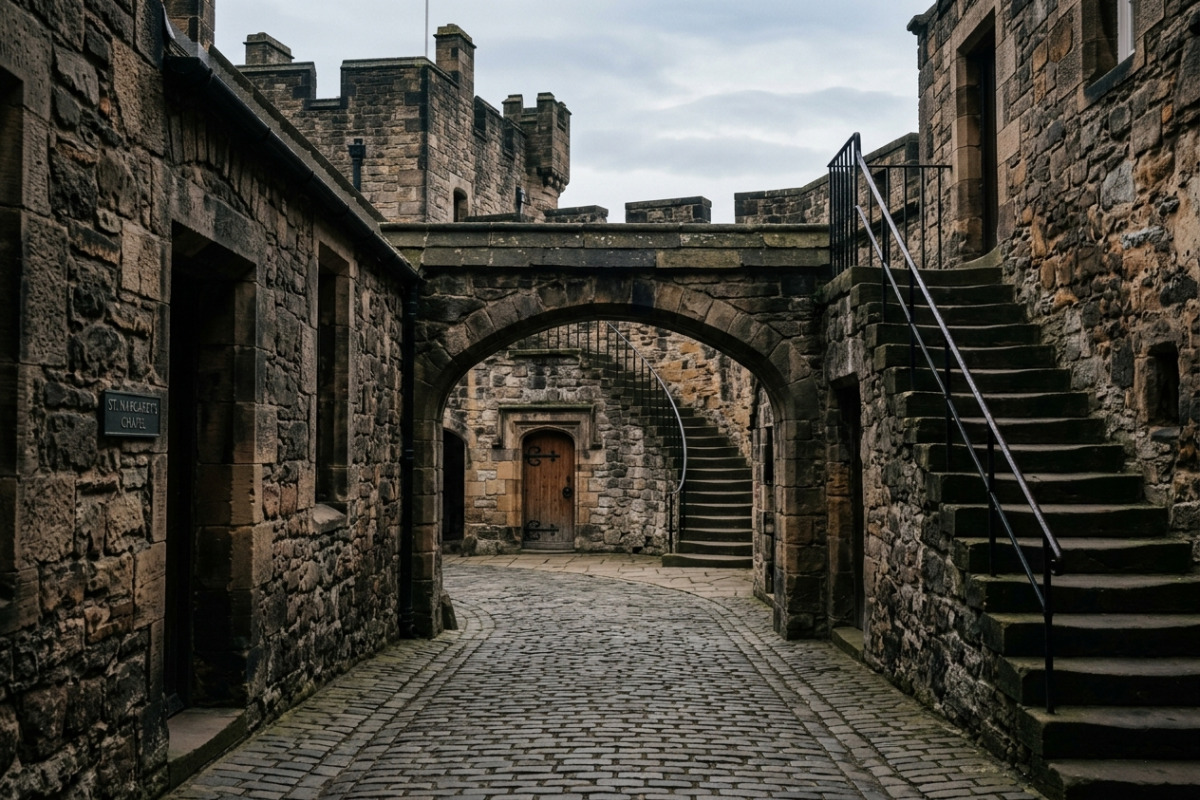
Step back in time to explore the everyday experiences of the royalty, soldiers, servants, and artisans who lived, worked, and thrived within the walls of Edinburgh Castle. Discover the lives behind the ramparts.
Standing atop the rugged volcanic rock that cradles Edinburgh Castle, it's easy to be captivated by the fortress's imposing presence. While history books often recount dramatic sieges and political shifts, the true story of Edinburgh Castle lies within the daily lives of those who called it home. From royalty to soldiers, servants to artisans, the castle functioned as a bustling, self-contained community. Delving into archival records, examining preserved artifacts, and exploring the physical remnants, we can uncover the routines, challenges, and celebrations that shaped this magnificent structure across centuries of Scottish history. Edinburgh Castle, a key landmark in Scottish history, has served as a royal residence, a military stronghold, and even a prison, each era leaving its mark on the daily lives within its walls. This article explores the lives behind the ramparts.
The Royal Court: Splendor, Protocol, and Intrigue
Life for the reigning monarchs and their immediate entourage was a fascinating blend of immense privilege and incredibly strict protocol. The Royal Palace served as the luxurious epicenter of this high-stakes world, where queens and kings navigated the daily complexities of court life. It was within these decorated walls that the Honours of Scotland, including the Crown Jewels, were guarded, and royal offspring were raised amidst the comforting scent of burning peat and roasting meats. Despite the thick stone walls designed for defense, the interiors were draped in vibrant tapestries to keep the biting Scottish chill at bay, creating a warm, secluded haven for the nobility. The Royal Palace, particularly during the reign of Mary, Queen of Scots (1542-1587), was a hub of political maneuvering and lavish entertainment.
Just a few steps away from the private chambers, Crown Square functioned as the administrative and ceremonial heart of the fortress. On any given day, this courtyard was buzzing with diplomats delivering urgent messages, nobles vying for royal favor, and guards maintaining strict order. When it was time to celebrate a significant military victory, a royal wedding, or a seasonal feast, the festivities naturally moved indoors to The Great Hall. Built for King James IV in the early 16th century, this magnificent space echoed with the sounds of plucking lutes, clashing silver goblets, and roaring fires. The grand banquets held here provided a stark, colorful contrast to the often bleak and unforgiving winters outside the fortress walls. The Great Hall served not only as a place for feasting but also as a venue for important state events and royal audiences.
Servants and Artisans: The Invisible Engine of Edinburgh Castle
Behind the velvet curtains and heavy oak doors, an invisible but essential army of workers kept the massive fortress running smoothly. Blacksmiths repaired chainmail and sharpened swords, bakers kneaded mountains of dough in sweltering ovens, and laundresses braved the freezing winds to wash the castle's linens. Their days typically began long before the sun rose over the Firth of Forth and ended only when the last embers in the great hearths faded into ash. The material culture discovered by archaeologists—worn stone steps, discarded pottery fragments, and meticulously kept inventory scrolls—reveals a life defined by relentless physical labor and unwavering dedication. These artifacts offer invaluable insights into the daily lives and working conditions of the castle's workforce.
The Logistics of Survival: Feeding the Fortress
Feeding and maintaining a population that often numbered in the hundreds was a logistical masterpiece. Fetching fresh water up the steep, rocky incline was a daily struggle, and preserving food without modern refrigeration required extensive knowledge of salting, smoking, and pickling. To better understand the complex ecosystem of the castle's workforce, we can look at some of the essential roles that kept the community alive. The castle's location high above the city also presented challenges in terms of waste disposal and sanitation, requiring careful planning and organization. Common meals would have consisted of bread, cheese, and whatever meat was available, supplemented by vegetables grown in small gardens within the castle walls. Ale and beer were staples, often safer to drink than the water supply.
| Role | Primary Work Area | Daily Responsibilities |
| Master Baker | Castle Kitchens | Managing the massive ovens, sourcing grain, and producing hundreds of loaves of bread daily for both royals and the garrison. |
| Blacksmith | The Smithy | Forging horseshoes, repairing armor, crafting arrowheads, and maintaining the ironwork of the castle doors and gates. |
| Scullery Maid | Kitchen Courtyards | Scrubbing pots, plucking poultry, carrying heavy buckets of water, and tending to the kitchen fires from dawn until dusk. |
| Garrison Brewer | The Brewhouse | Brewing weak ale (small beer) which was safer to drink than water, ensuring a steady supply for the thirsty soldiers on duty. |
Soldiers and Sentinels: Guarding the Rock - A Life of Duty and Drills
The military garrison lived a starkly different life compared to the royal court. Stationed on the windswept ramparts, soldiers faced the constant, lingering threat of invasion coupled with the incredibly mundane reality of endless daily drills. Maintaining the fortress's heavy artillery, including legendary weapons like Mons Meg, required immense physical effort and precise technical skill. This massive medieval cannon, dating back to the 15th century, was not just a weapon of destruction but a potent symbol of royal might that demanded constant care from specialized artillerymen. The firing of such weapons was a deafening event that would shake the very foundations of the rock, leaving thick clouds of sulfurous smoke hanging in the air.
The soldiers' living quarters were often cramped, noisy, and drafty. Privacy was completely non-existent, making camaraderie, shared songs, and storytelling essential for mental survival during the long, dark Scottish nights. They stood watch through howling gales and driving rain, their heavy woolen cloaks providing the only barrier against the elements. Yet, despite the hardships, serving in the castle garrison was a position of pride, offering steady rations and a sense of belonging to one of Europe's most formidable strongholds. Archaeological evidence suggests that soldiers often supplemented their rations with hunting and foraging, adding variety to their diet. Daily routines involved weapon maintenance, guard duty rotations, and rigorous training exercises. Discipline was strict, and punishments could be harsh for even minor infractions.
A Glimpse into Garrison Life: Routine and Readiness
Beyond guard duty and drills, a soldier's day was filled with tasks crucial to the castle's defense. Regular inspections of weapons and armor were paramount, ensuring everything was in working order. The armory would have been a hive of activity, with soldiers cleaning, repairing, and sharpening their equipment. Drills were not just about physical fitness; they were about instilling discipline and ensuring that every soldier knew their role in the event of an attack. The constant threat of siege meant that the garrison had to be prepared for anything, from scaling ladders to repelling invaders. Historic Environment Scotland provides further details on military life in Scottish castles.
Moments of Solace and Faith: St Margaret's Chapel
Amidst the chaotic noise of clashing steel, shouting merchants, and barking dogs, finding a moment of profound peace was vital for everyone, regardless of their social standing. St Margaret's Chapel provided exactly that much-needed sanctuary. As the oldest surviving building not just in the castle, but in the entire city, this tiny Romanesque structure offered a quiet refuge where queens prayed for healthy heirs and anxious soldiers sought spiritual comfort before a looming battle. Its enduring, peaceful presence reminds us today that spiritual life was deeply intertwined with the daily struggles and triumphs of the castle's historical inhabitants. St Margaret's Chapel, built in the 12th century, stands as a testament to the enduring power of faith throughout the castle's history.
Echoes of the Past in the Modern Era
Fast forward to the present day, and the fortress continues to honor the countless individuals who lived, served, and died within its sphere of influence. The Scottish National War Memorial stands as a deeply poignant testament to sacrifice, ensuring that the legacy of those who gave their lives in modern conflicts is never forgotten. It beautifully bridges the historical gap between the ancient medieval garrison and contemporary remembrance, allowing visitors from all over the world to pay their respects in a solemn, moving environment. To truly grasp the immense depth of this heritage, taking the time to read about The Story of Edinburgh Castle offers invaluable context before you even set foot on the bustling esplanade.
Planning Your Journey into History
Are you ready to walk in the very footsteps of kings, queens, artisans, and commoners? Planning your visit requires just a bit of preparation to ensure you make the absolute most of your time on the rock. Before you arrive, be sure to carefully review the Visiting Information and check out our Frequently Asked Questions to guarantee a smooth and enjoyable trip. When you are ready to secure your spot and immerse yourself in centuries of history, you can easily Book Your Castle Experience to begin your adventure.
As you prepare for your journey, keep these helpful traveler tips in mind:
- Take your time to Explore Our Sections, as each distinct area—from the dark vaults to the high battlements—holds its own unique architectural and historical wonders.
- Wear comfortable, sturdy walking shoes; the ancient cobbled pathways and steep inclines have been worn smooth by centuries of marching boots and royal carriages.
- Bring a warm, windproof layer. The breeze sweeping off the Firth of Forth can be remarkably brisk, giving you a tiny taste of what the sentinels of the past endured.
- Listen closely to the expert guides and the whispers of the wind, allowing your imagination to bring the forgotten stories of daily castle life brilliantly back into the light.
Enjoyed this article?
Share it with friends and fellow castle enthusiasts.