Discover the overlooked sieges and hidden conflicts that dramatically influenced the defensive architecture and rich history of Edinburgh Castle. Learn about the Ruse of 1341, the Lang Siege, and the Covenanter Sieges, and how they shaped the castle\'s defenses.
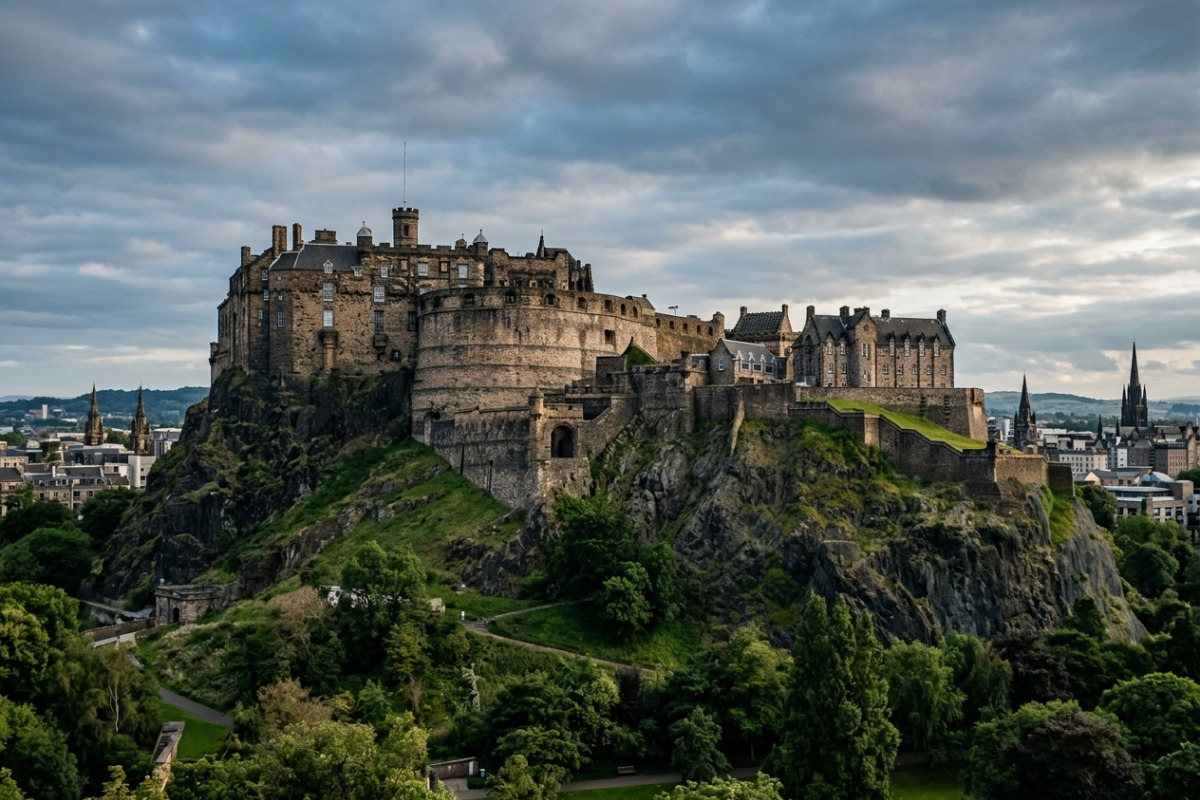
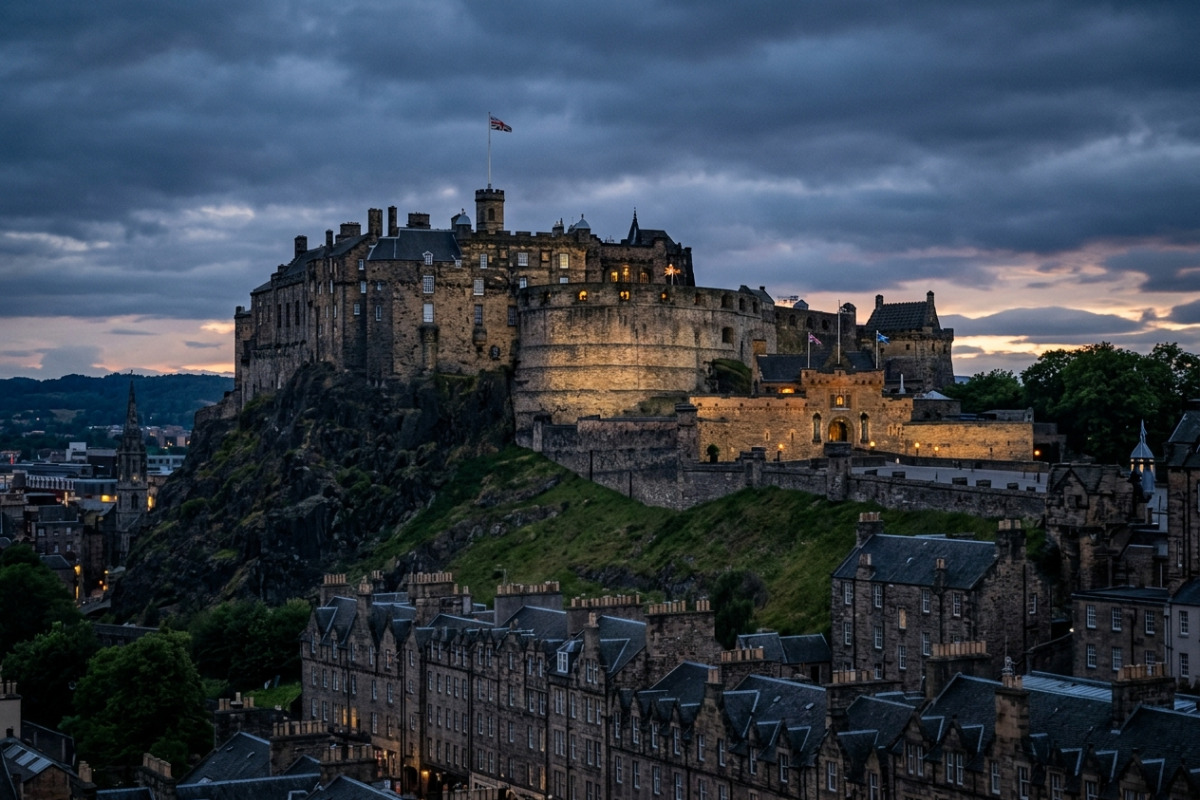
Perched high upon its ancient volcanic crag, Edinburgh Castle presents an image of unyielding strength and timeless majesty. For centuries, this iconic fortress has stood as the ultimate prize in the turbulent wars for Scottish independence and royal supremacy. While many history enthusiasts are familiar with the grand, sweeping narratives of Oliver Cromwell or the Jacobite risings, the true character of the fortress was often forged in the fires of lesser-known conflicts. As we wander through the castle grounds, taking in the sweeping views of the city below, it is easy to forget the desperate struggles that once echoed across these stones. Delving into the story of Edinburgh Castle reveals a complex tapestry of forgotten sieges, cunning tactics, and architectural evolution. This article explores some of the most significant, yet often overlooked, sieges of Edinburgh Castle, revealing how these events shaped its defenses and history. We will delve into the details of these Edinburgh Castle sieges, examining their impact on the castle's design and its place in Scottish history.
Edinburgh Castle's Strategic Evolution: A History of Sieges and Defenses
When we look at the imposing silhouette of the castle today, we are actually reading a physical record of military adaptation. Every wall, battery, and gateway was either built, destroyed, or modified in response to specific threats and siege tactics. The defensive design of the fortress did not emerge from a single architect's vision, but rather from the harsh lessons learned during repeated assaults. Early medieval sieges relied heavily on starvation and brute force, which slowly gave way to the devastating impact of gunpowder and artillery. Understanding these forgotten sieges of Edinburgh Castle is essential for anyone wanting to truly grasp how the site evolved from a simple royal refuge into an impregnable military garrison.
During the medieval period, the sheer cliffs of Castle Rock provided a natural defense that seemed impossible to breach. However, determined attackers quickly learned that what they could not conquer with direct force, they could overcome with deception or prolonged blockades. Each time the castle fell or was nearly compromised, the ruling monarchs would invest heavily in upgrading its fortifications. These continuous cycles of destruction and rebuilding transformed the landscape of the summit, forever altering the layout of spaces like the ceremonial Crown Square and its surrounding administrative buildings.
Early Sieges and the Struggle for Royal Control
While detailed records of very early sieges are scarce, it's known that Edinburgh Castle's strategic importance was recognized from a very early date. During the reign of David I (1124-1153), the castle became a significant royal center, and control of it was vital for maintaining power in Scotland. Sieges and conflicts during this period, though less documented, undoubtedly contributed to the initial strengthening of the castle's defenses. The constant struggle for control between the Scottish and English crowns ensured that Edinburgh Castle remained a focal point of military activity.
The Clever Ruse of 1341: A Scottish Trojan Horse at Edinburgh Castle
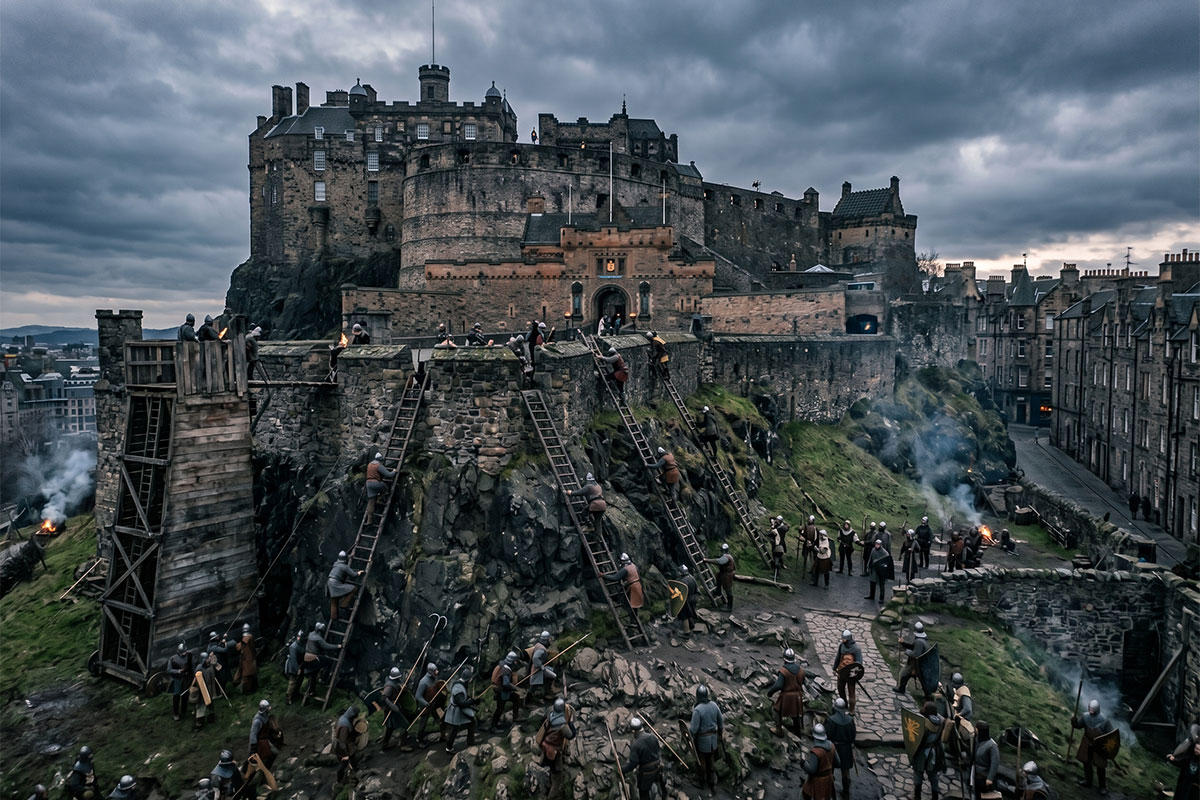
One of the most fascinating yet frequently overlooked assaults occurred in 1341, reading more like a thrilling heist than a traditional military engagement. At the time, the castle was held by a formidable English garrison loyal to Edward III, and a direct assault by Scottish forces was deemed suicidal. Sir William Douglas, Lord of Liddesdale, a cunning Scottish nobleman, devised a brilliant strategy that relied on trickery rather than pure military might. He and his men disguised themselves as merchants delivering vital supplies of wine, grain, and fuel to the castle's inhabitants. This early example of a 'Trojan Horse' tactic demonstrates the immense psychological and strategic pressure involved in medieval siege tactics.
While the details of this event are often presented as a dramatic tale, some historians consider it to be more of a local legend than a fully documented historical event. Nevertheless, the story highlights the importance of cunning and deception in medieval warfare. Upon reaching the castle gates, Douglas and his men deliberately halted their heavily laden carts directly beneath the portcullis, preventing the massive iron gate from being lowered. With the defenses temporarily paralyzed, a hidden force of Scottish warriors rushed from their concealed positions nearby and stormed the entrance. The ensuing skirmish was brief but incredibly fierce, resulting in the swift capture of the fortress. This daring raid highlighted a critical vulnerability in the castle's entrance design, prompting future generations to construct the complex series of heavily fortified gates and defensive chokepoints that visitors must still navigate today. The success of this siege can be attributed to the element of surprise and the exploitation of a known weakness in the castle's defenses. The long-term impact was a significant upgrade to the gatehouse security. According to historical accounts, the attacking force consisted of around 200 men, and the siege resulted in the deaths of the English governor and several members of the garrison. (Source: *The Chronicles of Scotland*, John of Fordun).
Ruse of 1341: Details
- Date: 1341
- Commanders: Sir William Douglas (Scottish), English Governor (Name Unknown)
- Tactics Used: Deception, infiltration, surprise attack
- Result: Scottish victory, capture of Edinburgh Castle
- Defensive Changes: Significant upgrades to gatehouse security, multi-layered gatehouses and chokepoints.
The Lang Siege (1571–1573): Edinburgh Castle Under Siege
While the Lang Siege is occasionally mentioned in historical texts, the sheer scale of its devastation and its profound impact on the castle's architecture are often underappreciated. This grueling two-year standoff occurred during a bitter civil war (the Marian Civil War) between the supporters of the exiled Mary, Queen of Scots (the 'Queen's Men'), and the forces loyal to her infant son, James VI (the 'King's Men'). The siege began in May 1571 and lasted until May 1573. The garrison holding the castle, loyal to Mary, endured relentless bombardment, disease, and the agonizing depletion of their water supplies. The attackers utilized highly advanced artillery for the era, positioning massive cannons, including Mons Meg (though it was reportedly damaged and less effective by this point), across the city to rain continuous fire upon the ancient walls.
The climax of this devastating siege resulted in the complete destruction of David's Tower, a massive L-plan tower house that had dominated the city skyline for over two centuries. The collapse of this towering structure effectively choked the castle's main well with rubble, forcing the desperate defenders to surrender merely days later. The ruins of David's Tower were eventually incorporated into the construction of the iconic Half Moon Battery, which now gives the castle its distinctive curved profile on the eastern side. Today, visitors exploring The Royal Palace are walking just steps away from where this monumental collapse changed the face of the fortress forever. The Lang Siege demonstrated the destructive power of artillery and the vulnerability of even the most formidable medieval structures. The lasting impact was a shift towards lower, thicker defensive walls designed to withstand cannon fire. The siege was led by Regent Morton on behalf of James VI, and the defenders were commanded by Kirkcaldy of Grange (Tytler, 1845).
Lang Siege (1571-1573): Details
- Date: May 1571 - May 1573
- Commanders: Regent Morton (King's Men), Kirkcaldy of Grange (Queen's Men)
- Tactics Used: Heavy artillery bombardment, siege warfare
- Result: King's Men victory, surrender of the Queen's Men
- Defensive Changes: Destruction of David's Tower, construction of the Half Moon Battery, shift towards thicker walls.
17th-Century Turbulence: The Covenanter Sieges of Edinburgh Castle
The 17th century brought a new wave of religious and political upheaval to Scotland, and Edinburgh Castle once again found itself at the epicenter of the storm. In 1640, the Covenanter forces, led by the experienced General Alexander Leslie, Earl of Leven, laid siege to the castle to wrest it from Royalist control. Leslie, who had gained extensive military experience fighting on the continent, employed sophisticated siege tactics that the ancient fortress had rarely faced. His forces utilized extensive mining operations, attempting to tunnel beneath the solid rock to plant explosive charges, combined with a highly coordinated artillery bombardment from multiple strategic vantage points. The siege lasted for three months, from March to June 1640.
Although the solid basalt of Castle Rock proved incredibly resistant to tunneling, the relentless artillery fire caused significant damage to the upper defenses and the interior buildings. The psychological toll on the defenders, coupled with dwindling supplies, ultimately led to a negotiated surrender. The aftermath of the Covenanter assaults forced military engineers to rethink the castle's vulnerability to modern artillery. This led to the reinforcement of the western defenses and the eventual creation of the elaborate artillery fortifications that characterize the site's modern military appearance. The Covenanter siege highlighted the need for constant adaptation to new military technologies and strategies. The long-term impact was a significant investment in modernizing the castle's defenses. The siege resulted in the surrender of the Royalist garrison, led by Colonel Walter Innes (Calderwood, 1842).
Covenanter Siege (1640): Details
- Date: March - June 1640
- Commanders: General Alexander Leslie (Covenanters), Colonel Walter Innes (Royalists)
- Tactics Used: Mining operations, coordinated artillery bombardment
- Result: Covenanter victory, surrender of the Royalist garrison
- Defensive Changes: Reinforcement of western walls, modernization of artillery batteries.
Cromwell's Occupation (1650-1660)
Following the Covenanter sieges, Edinburgh Castle fell under the control of Oliver Cromwell's forces during the English Civil War. While not a siege in the traditional sense, the occupation by Cromwell's troops led to further modifications and strengthening of the castle's defenses to ensure its continued control. The English recognized the castle's strategic value and invested in its infrastructure, leaving a lasting impact on its layout and functionality.
Physical Traces of Edinburgh Castle's Sieges: What Visitors Can See Today
The true magic of exploring historic Scottish battles lies in connecting the dramatic stories of the past with the tangible stones of the present. While centuries of rebuilding have smoothed over many battle scars, careful observers can still find remarkable traces of these forgotten sieges. As you explore our sections, keeping the history of these assaults in mind will entirely change your perspective of the fortress. Here are some of the key physical traces and landmarks that survive today:
- The Half Moon Battery: Built directly over the ruins of David's Tower, this massive curved wall was a direct architectural response to the devastating artillery fire of the Lang Siege. The rubble from David's Tower was used in its construction, a tangible link to the siege.
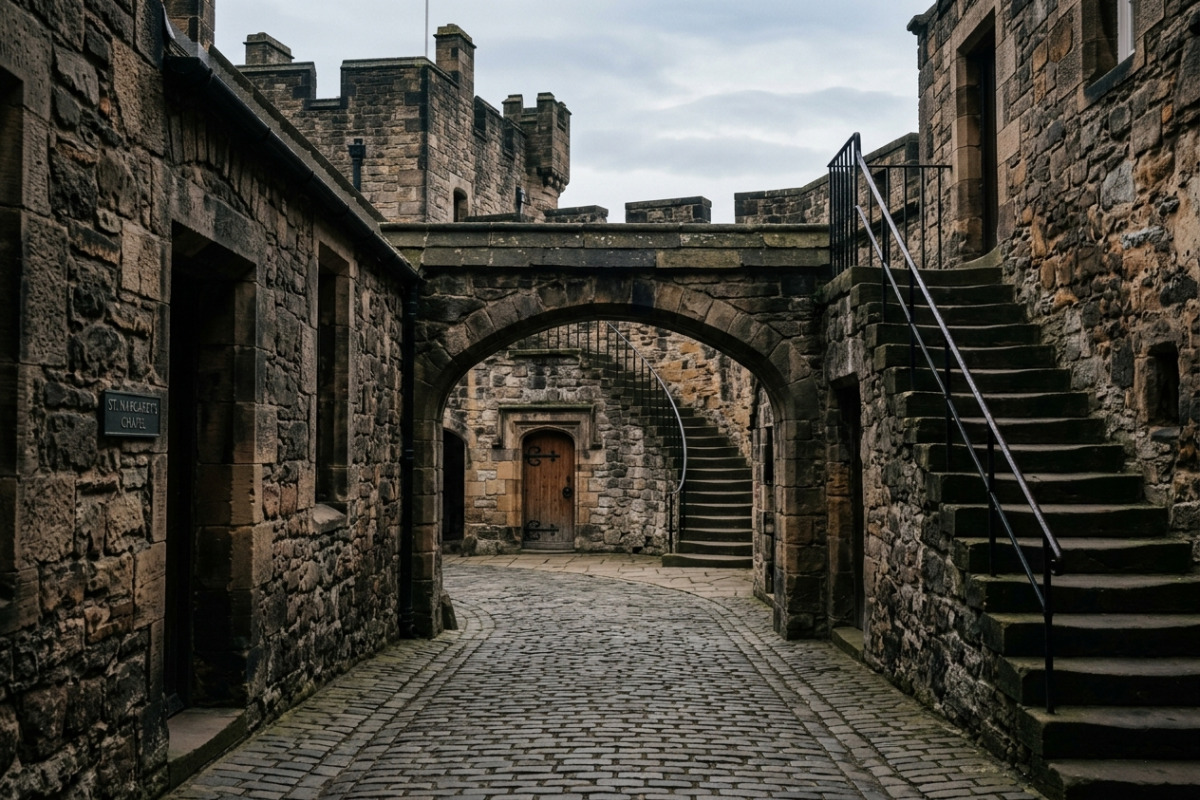
- St Margaret's Chapel: Miraculously surviving almost every major bombardment and capture, St Margaret's Chapel stands as a resilient witness to centuries of warfare. Its small, sturdy Romanesque design inadvertently protected it from destruction.
- The Portcullis Gate: The heavily fortified entrance sequence you walk through today was designed to prevent the exact type of cart-jamming trickery used by William Douglas in 1341.
- Artillery Emplacements: While exploring, you will encounter formidable weapons like Mons Meg, which provide vital context for understanding the terrifying scale of late medieval and early modern siege warfare. While Mons Meg was present during the Lang Siege, it was reportedly damaged and less effective.
Architectural Responses to Siege Warfare: A Timeline of Adaptation
To fully appreciate how these historic Scottish battles shaped the fortress, it is helpful to look at the direct correlation between the tactics used by attackers and the resulting defensive upgrades. The following table illustrates how specific conflicts forced the evolution of the castle's design:
| Historic Siege | Date | Primary Attack Tactic | Resulting Defensive Upgrade |
| The Ruse of 1341 | 1341 | Gate infiltration via disguised supply carts | Creation of complex, multi-layered gatehouses and chokepoints |
| The Lang Siege (1571) | 1571-1573 | Heavy, sustained artillery bombardment | Construction of the Half Moon Battery to deflect cannon fire |
| Covenanter Assault (1640) | 1640 | Coordinated crossfire and attempted mining | Reinforcement of western walls and modernization of artillery batteries |
Planning Your Visit: Exploring the Sieges of Edinburgh Castle
The legacy of these forgotten sieges is not just a tale of destruction, but a testament to human resilience and architectural ingenuity. Every time the walls were breached, they were rebuilt stronger, taller, and more sophisticated than before. Beyond the military history, the castle also serves as a place of profound reflection; a visit to the solemn Scottish National War Memorial reminds us of the human cost of conflict across the centuries. Meanwhile, the majestic beauty of The Great Hall stands in stark contrast to the brutal realities of the sieges that raged outside its sturdy walls.
Understanding the hidden history of Edinburgh Castle transforms a simple sightseeing trip into a deeply emotional journey through time. Before you arrive, we highly recommend checking our visiting information to help plan your route through these legendary fortifications. If you have any specific queries about accessibility or tour timings, our frequently asked questions page provides all the details you need. Do not miss the opportunity to walk in the footsteps of kings, queens, and cunning warriors—book your castle experience today and uncover the enduring secrets of Scotland's most iconic stronghold. By understanding the Edinburgh Castle sieges, you can gain a deeper appreciation for the resilience and strategic importance of this iconic landmark.
Edinburgh Castle Sieges: A Timeline
- 1341: Ruse of 1341 - Sir William Douglas captures the castle.
- 1571-1573: The Lang Siege - Devastating siege during the Marian Civil War.
- 1640: Covenanter Siege - Covenanters besiege and capture the castle.
- 1650-1660: Cromwell's Occupation - English forces occupy and modify the castle.
Visiting Tips
- Best Time to Visit: Spring or Autumn for fewer crowds.
- Tickets: Book online in advance to save time and guarantee entry.
- Key Remains to See: Half Moon Battery, Portcullis Gate, St Margaret's Chapel.
Enjoyed this article?
Share it with friends and fellow castle enthusiasts.