Explore the fascinating architectural journey of Edinburgh Castle, tracing its transformation from an early Iron Age hillfort to a magnificent medieval royal residence and a formidable modern fortress. This architectural evolution of Edinburgh Castle showcases how shifting military tactics, ceremonial requirements, and domestic needs shaped the structural innovations that define the castle precincts.
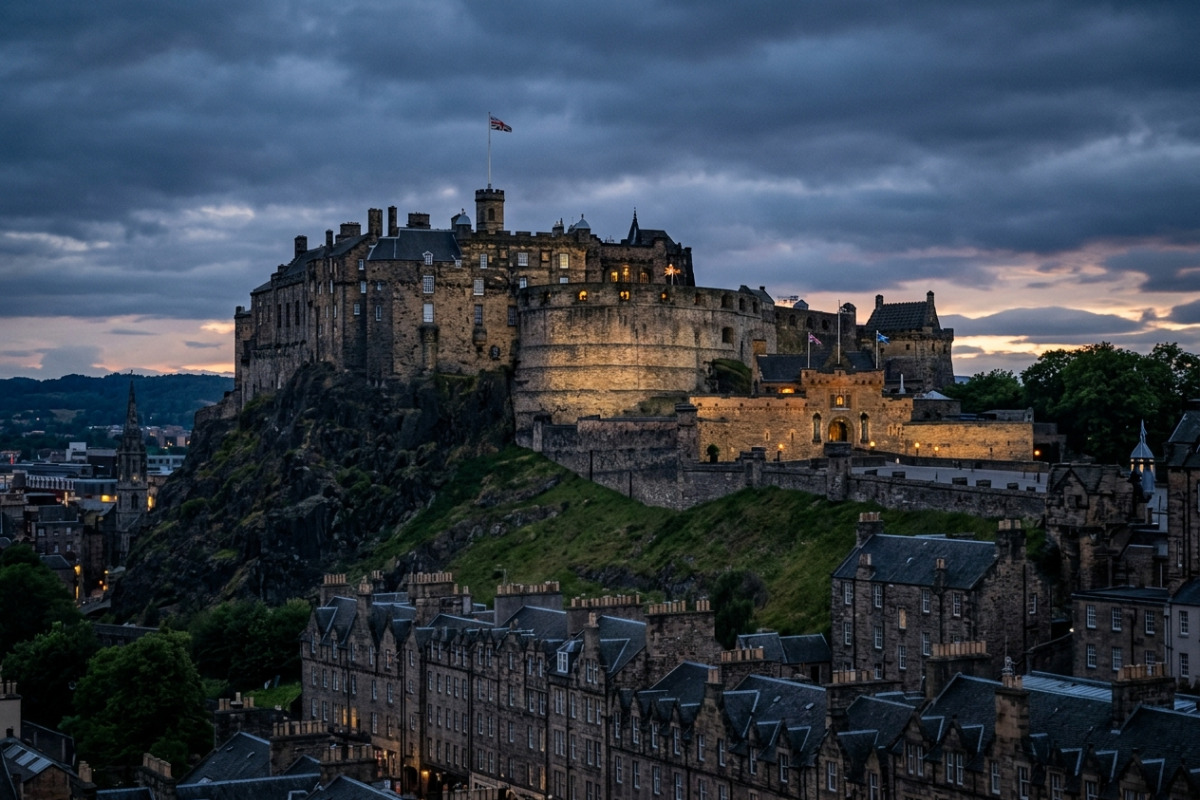
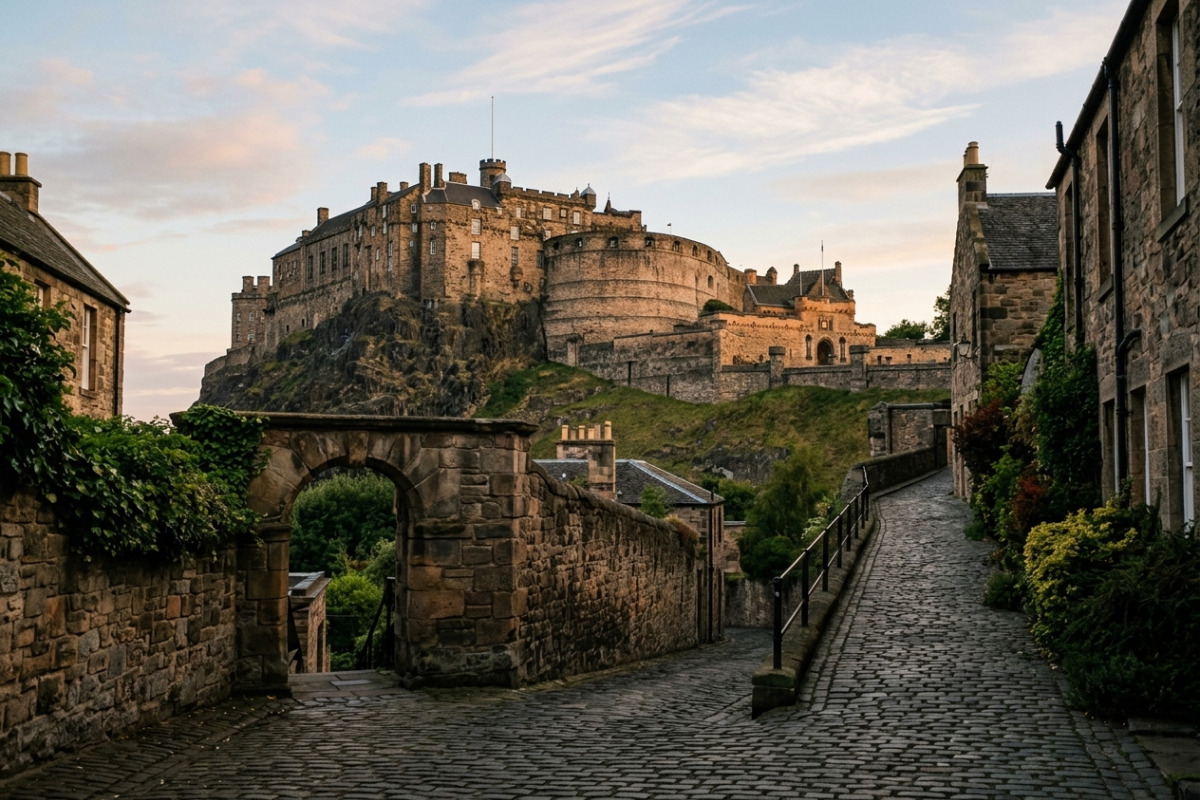
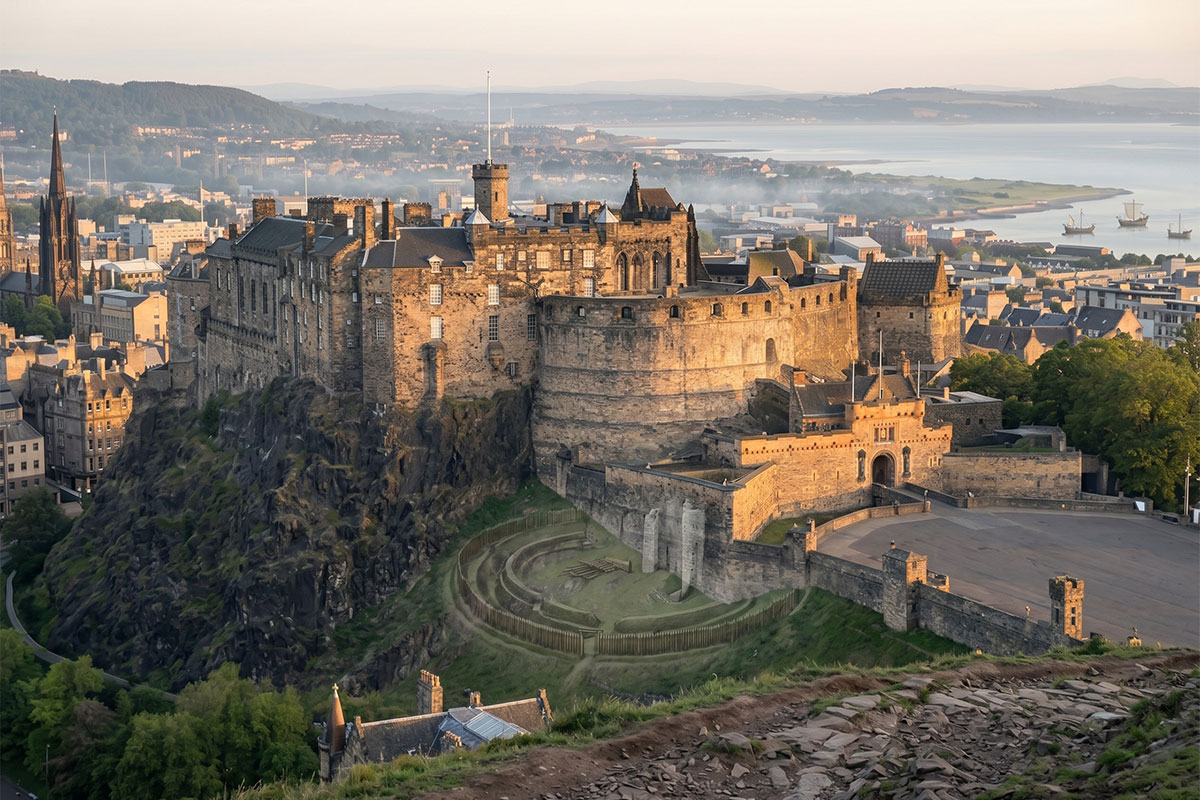
Perched high upon the rugged remnants of an extinct volcano, the silhouette of Edinburgh Castle dominates the city skyline. This dramatic basalt outcrop, known as Castle Rock, has been a focal point of human settlement for over three millennia. Its enduring presence is a testament to its strategic importance and the architectural ingenuity employed throughout its history. What we see today is not the product of a single architectural vision, but rather a complex, overlapping history of stone and mortar that tells a story of survival, power, and adaptation. Tracing the story of Edinburgh Castle reveals a fascinating journey from a primitive Iron Age settlement to a sophisticated medieval royal residence, and eventually into a formidable military garrison. This architectural evolution of Edinburgh Castle showcases how shifting military tactics, ceremonial requirements, and domestic needs shaped the structural innovations that define the castle precincts as they stand in April 2026. By peeling back the centuries, we can understand the layers of history embedded within its walls.
The Dawn of Castle Rock: From Iron Age Hillfort to Early Defences
Long before the heavy stone walls were erected, the natural topography of Castle Rock provided an ideal defensive position. Historical and archaeological evidence suggests that a thriving Iron Age hillfort, known to the Votadini tribe as Din Eidyn, occupied the summit. These early inhabitants relied heavily on the steep, sheer cliffs of the volcanic plug, augmenting them with simple timber palisades and rudimentary dry-stone ramparts. The architecture of this era was purely functional, driven by the immediate need for survival against rival tribes and invading forces. As centuries passed and the strategic importance of the site grew, these early timber structures were gradually replaced by more permanent fortifications, laying the groundwork for the sprawling complex we explore today.
Key Features of the Iron Age Hillfort:
- Defensive Palisade: A timber wall surrounding the settlement.
- Ramparts: Earth and stone embankments for added protection.
- Roundhouses: Simple circular dwellings.
A Royal Sanctuary: The Shift to Medieval Stone
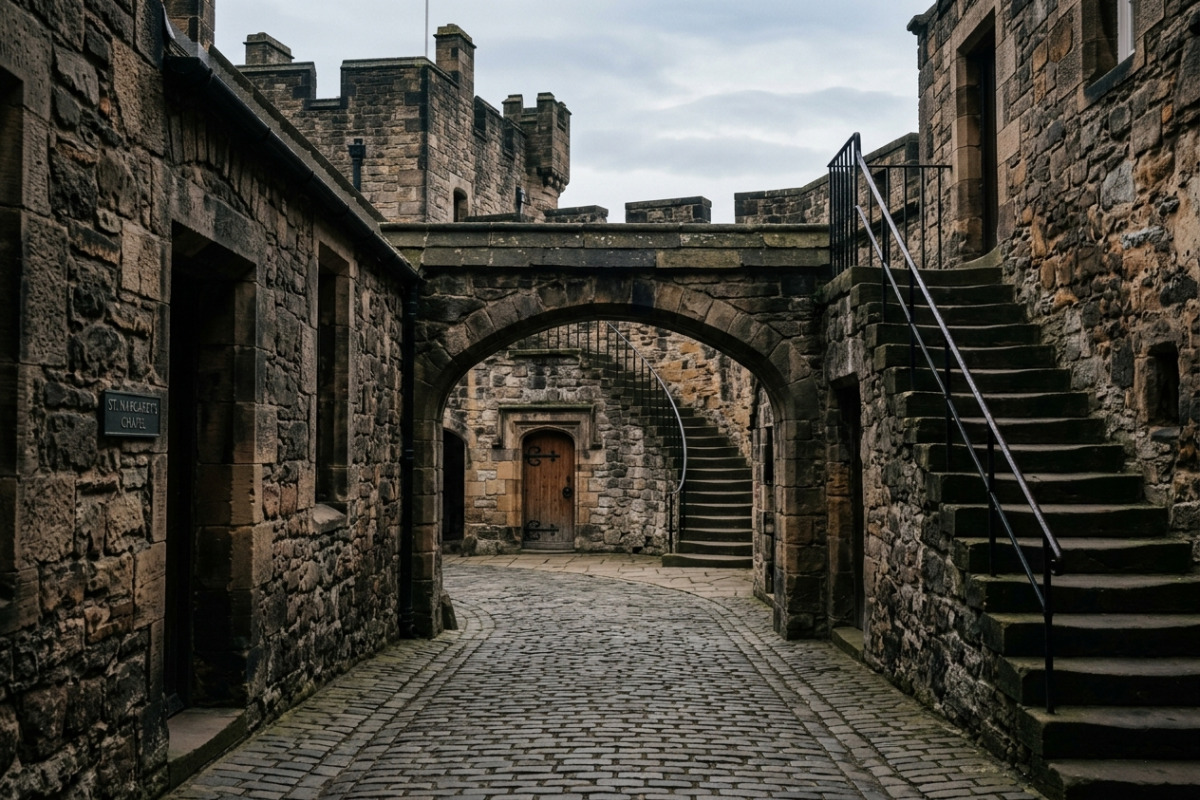
By the 11th and 12th centuries, the architectural narrative of the site began to shift dramatically. The Scottish monarchy recognised the supreme strategic value of the rock, transforming the ancient hillfort into a fortified royal residence. This era marked the vital transition from temporary timber defences to enduring stone masonry, reflecting both a desire for permanence and a display of divine right. The most poignant surviving example of this period is St Margaret's Chapel. Constructed in the early 12th century, likely around 1130 by King David I in memory of his mother, Queen Margaret, this tiny Romanesque structure holds the title of the oldest surviving building in Edinburgh. Its thick stone walls, rounded arches, and intimate scale highlight a period where architectural innovation was heavily influenced by religious devotion and the need for a private royal sanctuary amid a turbulent kingdom. The chapel's simple yet elegant design reflects the Norman architectural style prevalent at the time.
St Margaret's Chapel: A Glimpse into Norman Architecture
St Margaret's Chapel, dedicated to Queen Margaret, exemplifies early Romanesque architecture. Its simple design and solid construction reflect the era's focus on functionality and spiritual devotion. The chapel's small size underscores its role as a private sanctuary for the royal family. The interior features a chancel arch adorned with chevron detailing, a characteristic of Norman architecture. Recent conservation efforts have focused on preserving the chapel's original stonework and stained glass.
The High Middle Ages: Crafting a Royal Residence
As the Scottish court flourished, the architectural requirements of the castle expanded significantly. It was no longer sufficient for the site to serve merely as a defensive stronghold; it needed to project the wealth, power, and sophistication of the monarchy. This dual requirement birthed a period of intense construction, particularly around what is now known as Crown Square. For over half a millennium, this main courtyard has served as the ceremonial and administrative heart of the complex, surrounded by buildings designed to impress visiting dignitaries and house the royal household in absolute comfort.
Within this prestigious enclave stands The Royal Palace, a structure that beautifully illustrates the evolution of domestic royal architecture. With its ornate fireplaces, expansive chambers, and secure vaults designed to house the Honours of Scotland, the palace reflects a shift towards luxurious living within a highly secure perimeter. The Royal Palace has undergone numerous renovations and expansions over the centuries, reflecting the changing tastes and needs of the Scottish monarchs. Adjacent to the palace, visitors can marvel at The Great Hall, completed around 1511 for King James IV. This magnificent space features a breathtaking hammer-beam roof, a marvel of late medieval engineering that allowed for a wide, open interior without the need for supporting pillars. The hall was specifically designed for grand banquets and state ceremonies, perfectly illustrating how architectural design adapted to fulfil vital ceremonial needs.
The Royal Palace: A Symbol of Royal Power
The Royal Palace served as the principal residence of Scottish monarchs. Its architecture evolved over centuries, reflecting changing tastes and needs. The palace houses the Crown Jewels of Scotland, a testament to the kingdom's rich history. The Stone of Scone, also known as the Stone of Destiny, is also housed within the Royal Palace.
The Great Hall: A Masterpiece of Medieval Engineering
The Great Hall's hammer-beam roof is a remarkable feat of engineering. This innovative design allowed for a vast, open space, ideal for banquets and ceremonies. The hall's grandeur reflects the power and prestige of the Scottish monarchy. The walls are adorned with displays of arms and armour, further enhancing its historical significance.
Gunpowder and Stone: The Artillery Revolution
The late Middle Ages and the dawn of the Renaissance brought a terrifying new element to warfare: gunpowder. This technological leap forced a radical rethink of castle architecture across Europe, and Edinburgh was no exception. High, relatively thin medieval walls were suddenly highly vulnerable to direct cannon fire. In response, the castle's defences were adapted with thicker, lower artillery ramparts and angled bastions designed to deflect incoming projectiles and provide solid platforms for defensive fire.
The integration of massive siege weapons into the castle's defensive strategy is best embodied by the presence of Mons Meg. To accommodate such colossal cannons, the structural layout of the battlements had to be heavily reinforced and redesigned. Gun loops were carefully carved into existing walls, and specialised artillery mounts were constructed, transforming the royal residence into a cutting-edge military fortress capable of withstanding prolonged and devastating sieges. Mons Meg, a 15th-century siege cannon, is a powerful symbol of this shift.
Mons Meg: A Colossal Cannon
Mons Meg, a massive siege cannon, represents the shift in military technology during the late Middle Ages. Its presence necessitated significant modifications to the castle's defenses. Originally built in Belgium and presented to King James II of Scotland in 1457, Mons Meg could fire projectiles weighing up to 150 kg.
Another key structure from this era is the Half Moon Battery, constructed after the Lang Siege of 1573 (more on this below). This semi-circular bastion provided a wide field of fire for the castle's artillery.
The Modern Fortress: Garrisons, Prisons, and Memorials
Following the Union of the Crowns and the subsequent political shifts of the 18th and 19th centuries, the castle's role as a primary royal residence declined. The architecture evolved once again, this time to serve the strictly utilitarian needs of a military garrison and a secure prison for prisoners of war. Elegant royal chambers were hastily repurposed, and new, austere barrack blocks were erected to house thousands of regular soldiers. This period heavily prioritised function over form, resulting in the stark, imposing structures that dominate the lower wards of the castle today.
Yet, the 20th century brought a beautiful return to ceremonial and emotional architecture. Following the immense devastation of the First World War, a former barrack block was masterfully transformed into the Scottish National War Memorial. Architect Robert Lorimer seamlessly blended the existing historical stonework with poignant, symbolic sculpture and stunning stained glass. This architectural adaptation created a space of profound solemnity, demonstrating how the buildings of Castle Rock continue to evolve in response to the emotional and ceremonial needs of the Scottish people.
The Scottish National War Memorial: A Place of Remembrance
The Scottish National War Memorial is a testament to the sacrifices made by the Scottish people during times of war. Its design incorporates elements of Scottish Baronial architecture and features intricate stained glass and sculpture. The memorial was officially opened in 1927 and serves as a place of pilgrimage for families of the fallen.
Architectural Timeline of Edinburgh Castle
To help visualise the layered history of the site, here is a breakdown of the key architectural phases that shaped the fortress:
| Era | Key Architectural Phase | Surviving Examples | Primary Function |
| Iron Age to Early Medieval | Timber palisades and earthworks | Archaeological traces only | Basic tribal defence and settlement |
| 11th - 12th Century | Introduction of permanent stone masonry | St Margaret's Chapel | Royal sanctuary and enduring fortification |
| 15th - 16th Century | Late medieval domestic and ceremonial building | The Royal Palace, The Great Hall | Luxurious royal residence and state administration |
| 16th - 17th Century | Artillery fortifications and bastions | Half-Moon Battery, Portcullis Gate | Advanced military defence against gunpowder |
| 18th - 20th Century | Utilitarian barracks and memorial adaptation | New Barracks, Scottish National War Memorial | Military garrison, prison, and national remembrance |
Visualising the Layers Today
When you walk through the formidable portcullis gates today, you are essentially stepping through a living timeline of Scottish history. The true beauty of the site lies in its immense architectural diversity. You can run your hands along the rough, utilitarian stonework of early defensive walls, admire the refined Romanesque arches of the 12th century, and gaze up at the intricate timber engineering of the Renaissance all in one afternoon.
To fully appreciate these overlapping layers of history, we highly recommend that you explore our sections systematically. Each building, courtyard, and battery offers a unique perspective on how the historic inhabitants interacted with their demanding environment. If you are planning your visit and want to ensure you do not miss any of these architectural marvels, be sure to review our visiting information. Additionally, our comprehensive Frequently Asked Questions page provides valuable insights to help you navigate the steep cobbled pathways and hidden corners of the fortress with ease.
Key Elements to Look Out For:
- The Half-Moon Battery: A sweeping, curved artillery defence built in the aftermath of the devastating Lang Siege, showcasing the distinct transition to gunpowder warfare.
- The Portcullis Gate: A formidable 16th-century addition designed to create a lethal choke point for any attackers attempting to breach the upper wards.
- The Hammer-beam Roof: Look up when inside the Great Hall to see the intricate, interlocking timber brackets that entirely eliminate the need for central supporting pillars.
- Romanesque Chevron Detailing: Clearly visible around the elegant chancel arch inside the oldest chapel on the rock, representing early religious architectural trends.
Plan Your Journey Through Time
The architectural evolution from a simple timber hillfort to a majestic stone fortress is a powerful reminder of human ingenuity and resilience. Every single stone laid upon the volcanic rock serves as a silent witness to centuries of brutal warfare, lavish royal celebrations, and profound national remembrance. Do not just read about this incredible transformation from afar; come and experience the layered history for yourself. Book your castle experience today and prepare to walk in the very footsteps of ancient tribes, medieval monarchs, and modern heroes.
Detailed Architectural Breakdown by Era
Iron Age Hillfort (c. 900 BC - 1st Century AD)
Materials: Predominantly natural materials - timber (likely oak and birch), earth, and undressed stone. Evidence suggests the use of wattle and daub for some structures.
Style: Functional and rudimentary. No discernible aesthetic style; construction focused solely on defense and basic shelter.
Function: Primarily defensive. The hillfort served as a refuge for the Votadini tribe, providing protection for people, livestock, and stored resources.
Architectural Elements:
- Palisades: Timber walls constructed from sharpened logs, creating an outer defensive perimeter.
- Ramparts: Earth and stone embankments reinforcing the natural defenses of Castle Rock.
- Ditches: Excavated ditches surrounding the ramparts, further hindering attackers.
- Roundhouses: Circular dwellings constructed from timber and wattle and daub, providing basic shelter.
Early Medieval Royal Fortress (11th - 12th Centuries)
Materials: Local sandstone, volcanic rock, and lime mortar.
Style: Romanesque, with influences from Norman architecture.
Function: Royal residence, defensive stronghold, and religious center.
Architectural Elements:
- St. Margaret's Chapel: A small, Romanesque chapel featuring rounded arches, thick walls, and a barrel-vaulted ceiling. The chapel's dimensions (approximately 16 feet by 10 feet) reflect its intimate purpose.
- Curtain Walls: Stone walls enclosing the summit of Castle Rock, providing a more substantial defense than previous timber structures.
- Gatehouse: A fortified entrance providing controlled access to the castle.
Sources: Fawcett, Richard. *Scottish Architecture from the Eleventh to the Seventeenth Centuries*. Edinburgh: Birlinn, 2002.
Late Medieval Royal Residence (15th - 16th Centuries)
Materials: High-quality sandstone, oak timber, lead roofing, and decorative elements such as carved stone and stained glass.
Style: Scottish Baronial, incorporating elements of Gothic and Renaissance architecture.
Function: Royal residence, administrative center, ceremonial space, and defensive stronghold.
Architectural Elements:
- The Royal Palace: A complex of buildings including royal apartments, audience chambers, and the Crown Jewels vault. Features include ornate fireplaces, large windows, and decorative plasterwork.
- The Great Hall: A large hall used for banquets, ceremonies, and state events. The hammer-beam roof is a notable feature, spanning the width of the hall without the need for supporting pillars.
- David's Tower: A massive tower providing additional defense and housing royal apartments. (Largely destroyed, but archaeological remains are present.)
Artillery Fortress (16th - 17th Centuries)
Materials: Massive stone walls, earth ramparts, and specialized materials for gun emplacements (e.g., reinforced stone and ironwork).
Style: Functional military architecture, with an emphasis on defense against cannon fire.
Function: Military defense, housing artillery, and providing a secure base for troops.
Architectural Elements:
- Half Moon Battery: A semi-circular artillery platform designed to provide a wide field of fire.
- Portcullis Gate: A fortified entrance with a heavy iron gate and machicolations (openings in the roof for dropping projectiles on attackers).
- Gun Emplacements: Specialized platforms and openings for mounting cannons.
Military Garrison and Memorial (18th - 20th Centuries)
Materials: Utilitarian materials such as brick, concrete, and plain stonework for barracks. High-quality stone, stained glass, and sculpture for the War Memorial.
Style: Georgian and Victorian military architecture for barracks. Scottish Baronial Revival for the War Memorial.
Function: Housing troops, providing military support, and commemorating Scottish war dead.
Architectural Elements:
- New Barracks: Simple, functional buildings designed to house large numbers of soldiers.
- Scottish National War Memorial: A richly decorated memorial featuring stained glass, sculpture, and commemorative plaques.
Edinburgh Castle: Key Dates and Events Timeline
The following timeline highlights key moments in Edinburgh Castle's history, illustrating how these events influenced its architectural development:
| Date | Event | Architectural Significance |
| c. 900 BC | Establishment of Iron Age Hillfort (Din Eidyn) | Earliest known settlement and defensive structure on Castle Rock. |
| c. 600 AD | Mentioned in historical texts as a significant stronghold. | Demonstrates the continued strategic importance of the site. |
| c. 1130 | Construction of St. Margaret's Chapel | Marks the transition to permanent stone construction and the establishment of a royal residence. |
| 1296 | Captured by Edward I of England | Highlights the castle's strategic importance during the Wars of Scottish Independence. |
| 1314 | Recaptured by the Scots under Thomas Randolph, Earl of Moray | The castle was slighted (partially destroyed) to prevent English reoccupation. |
| 1357 | David's Tower is built | Significant expansion of the royal residence. |
| c. 1510 | Completion of the Great Hall | Reflects the flourishing of the Scottish court and the need for a grand ceremonial space. |
| 1573 | Lang Siege | Demonstrates the vulnerability of medieval walls to artillery and leads to the construction of artillery fortifications. |
| Late 16th - Early 17th Century | Construction of Half Moon Battery and Portcullis Gate | Significant upgrades to the castle's defenses in response to gunpowder warfare. |
| 1603 | Union of the Crowns | The castle's role as a primary royal residence declines. |
| 1757 | Construction of the New Barracks begins | Reflects the castle's transformation into a military garrison. |
| 1927 | Opening of the Scottish National War Memorial | Marks a return to ceremonial architecture and national remembrance. |
| 1995 | Edinburgh's Old and New Towns, including Edinburgh Castle, become a UNESCO World Heritage Site. | Recognizes the outstanding universal value of the site and the need for its protection. |
| 2015 | Extensive conservation work is carried out on the Great Hall's hammer-beam roof. | Ensures the preservation of this significant architectural feature for future generations. |
The Lang Siege (1571-1573): This pivotal event saw Edinburgh Castle besieged by forces loyal to Mary, Queen of Scots. The siege highlighted the castle's vulnerability to artillery fire and prompted significant upgrades to its defenses, including the construction of the Half Moon Battery.
UNESCO World Heritage Status: In 1995, Edinburgh's Old and New Towns, including Edinburgh Castle, were inscribed on the UNESCO World Heritage List. This designation recognizes the outstanding universal value of the site and underscores the importance of preserving its architectural and historical integrity.
Plan Your Visit to Edinburgh Castle
Quick Visit Information:
- Opening Hours: Daily, 9:30 AM - 6:00 PM (Seasonal variations may apply)
- Tickets: Purchase online in advance. Book Now!
- Location: Top of the Royal Mile, Edinburgh's Old Town
- Accessibility: Limited accessibility in some areas. Check the official website.
Opening Hours: Daily, 9:30 AM - 6:00 PM (Seasonal variations may apply. Check the official website for the latest information.)
Tickets: Purchase tickets online in advance to guarantee entry and save time. Book your tickets now!
Getting There: Edinburgh Castle is located at the top of the Royal Mile in Edinburgh's Old Town. It is easily accessible by public transport and is a short walk from Waverley train station.
Accessibility: Due to the historic nature of the site, some areas may have limited accessibility. Please check the official website for detailed information on accessibility and available assistance.
Enjoyed this article?
Share it with friends and fellow castle enthusiasts.