Go beyond the famous crown jewels and discover Edinburgh Castle's true secrets, from subterranean ruins and prisoner carvings to a hidden regimental dog cemetery.
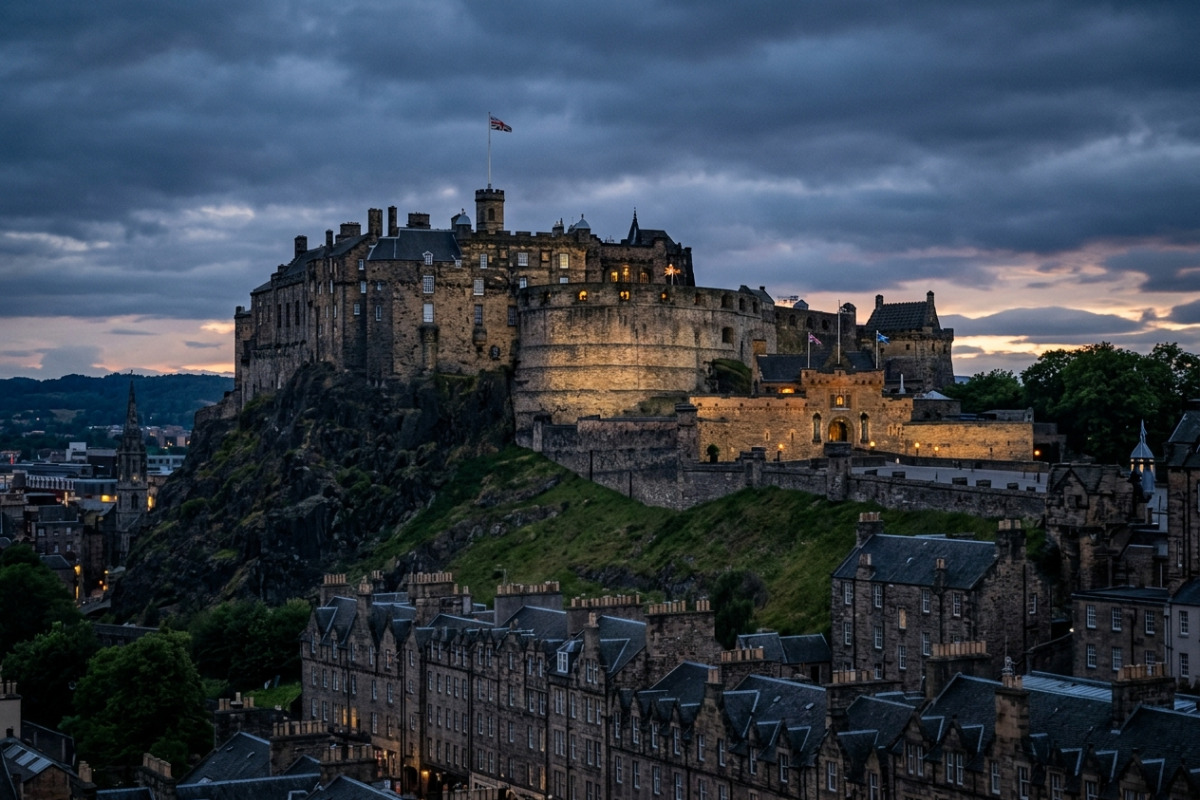
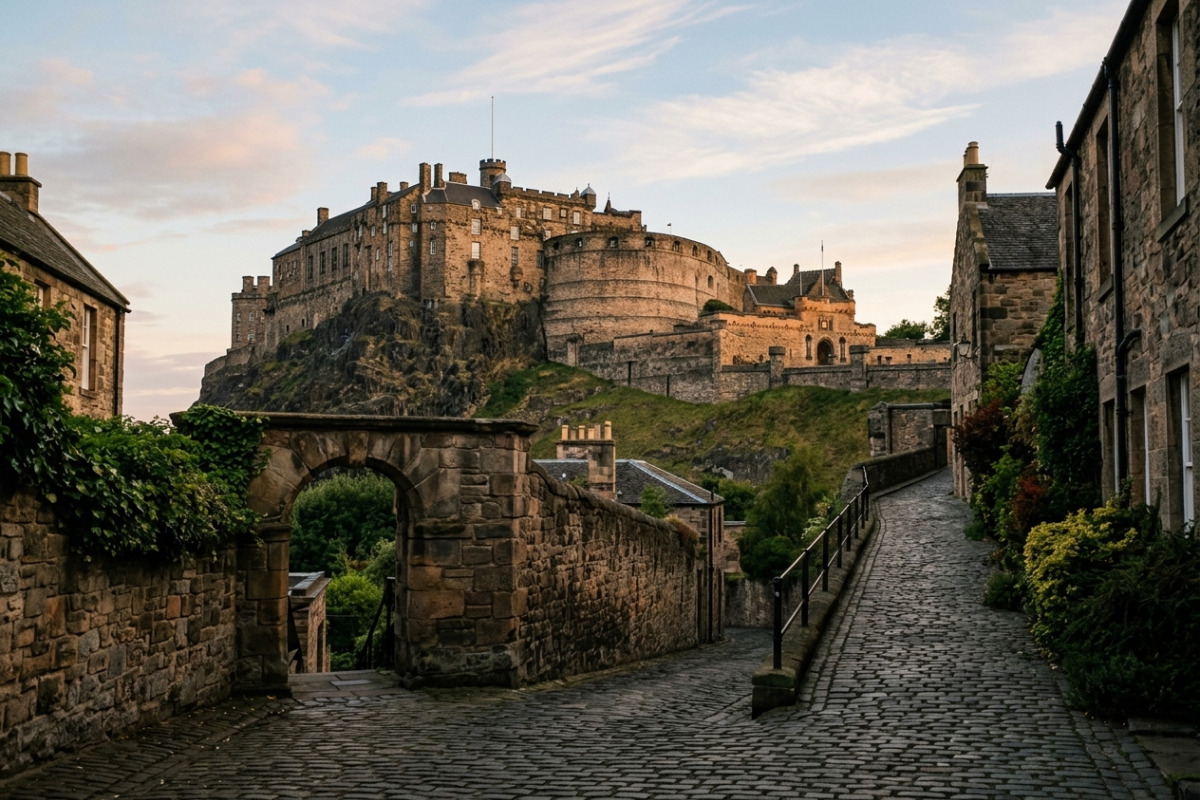
Edinburgh Castle, perched imperiously upon Castle Rock, is a site so synonymous with Scottish identity that its most famous features—the Honours of Scotland and the One O'Clock Gun—often eclipse the more subtle, enigmatic layers of its history. For the discerning traveler, the true magic of this fortress lies not in the crowded galleries of the Royal Palace, but in the shadows of its ancient stones and the obscure corners that most visitors walk right past. To truly understand the castle is to look beyond its formidable curtain walls and explore the hidden treasures that tell a more intimate, human story of siege, survival, and craftsmanship.
The Subterranean Secrets: David’s Tower and the Half Moon Battery
One of the most profound hidden treasures of Edinburgh Castle is actually buried beneath the ground you walk on. The Half Moon Battery, which gives the castle its distinctive curved eastern profile, hides the ruins of the original David’s Tower. Built in the 14th century, this massive L-shaped tower was once the heart of the castle's defenses and its royal residence. However, during the Lang Siege of 1573, the tower was bombarded into rubble.
Rather than clearing the debris, the builders of the new battery simply built over it. Today, those who seek out the entrance to the excavations can descend into a world of medieval masonry. These subterranean chambers offer a haunting glimpse into the castle’s architectural evolution. Walking through these cold, stone passages, you can see the original entrance to the tower, now encased in 16th-century fortifications. This is a place where the air feels heavier, and the transition from the medieval to the early modern period is physically tangible.
The Forgotten Art: Prisoner of War Carvings
While the Great Hall is celebrated for its magnificent hammerbeam roof, the vaults directly beneath it hold a treasure of a different kind. During the 18th and 19th centuries, these dark, damp spaces served as a prison for thousands of captives from the Seven Years' War, the American War of Independence, and the Napoleonic Wars. These men, far from home and facing uncertain futures, left behind a remarkable collection of 'hidden' art.
Etched into the wooden doors and stone walls are intricate carvings—graffiti of the most sophisticated kind. You can still see detailed depictions of sailing ships, American flags with the original thirteen stars, and the names of French privateers. One of the most famous pieces of 'hidden' history here is a carving of a guillotine, a grim reminder of the revolutionary fervor back in France. These markings are not just scratches; they are the voices of the common soldier and sailor, providing a stark contrast to the royal narratives found in the upper levels of the castle.
A Quiet Tribute: The Regimental Dog Cemetery
In a castle defined by the thunder of cannons and the clash of steel, there is a small, secluded spot that offers a moment of unexpected tenderness. Tucked away on a terrace above the hospital square is the Dog Cemetery. Since the 1840s, this tiny plot of land has served as the final resting place for the mascots and officers' pets of the Scottish regiments.
This is one of the few areas of the castle that is not accessible to the public, but it can be clearly viewed from the walls near the Argyle Battery. The small headstones, often decorated with flowers by the castle staff, commemorate loyal companions like 'Dobbler' and 'Yum Yum.' It is a poignant hidden treasure that speaks to the emotional life of the soldiers who lived within these walls, reminding us that even in a fortress designed for war, there was a place for companionship and grief.
The Birthing Chamber: A Small Space with Massive History
Within the Royal Palace, visitors often flock to the large ceremonial rooms. However, one of the most historically significant spots is a tiny, claustrophobic chamber known as the 'Birthing Room.' It was here, in June 1566, that Mary Queen of Scots gave birth to James VI, who would eventually unite the crowns of Scotland and England.
The room is surprisingly small—barely large enough for a bed and a few attendants—and its walls are decorated with the royal coat of arms and the date of the birth. The intimate scale of this room is a hidden treasure in itself; it forces a realization of the physical realities of royal life. Despite the grandeur of the palace, the most pivotal moments in Scottish history often occurred in these cramped, private spaces. The painted ceiling and the heraldic symbols provide a rich visual narrative for those who take the time to linger and reflect on the dynastic shift that began within these four walls.
The Lang Stairs: The Path of the 1314 Surprise Attack
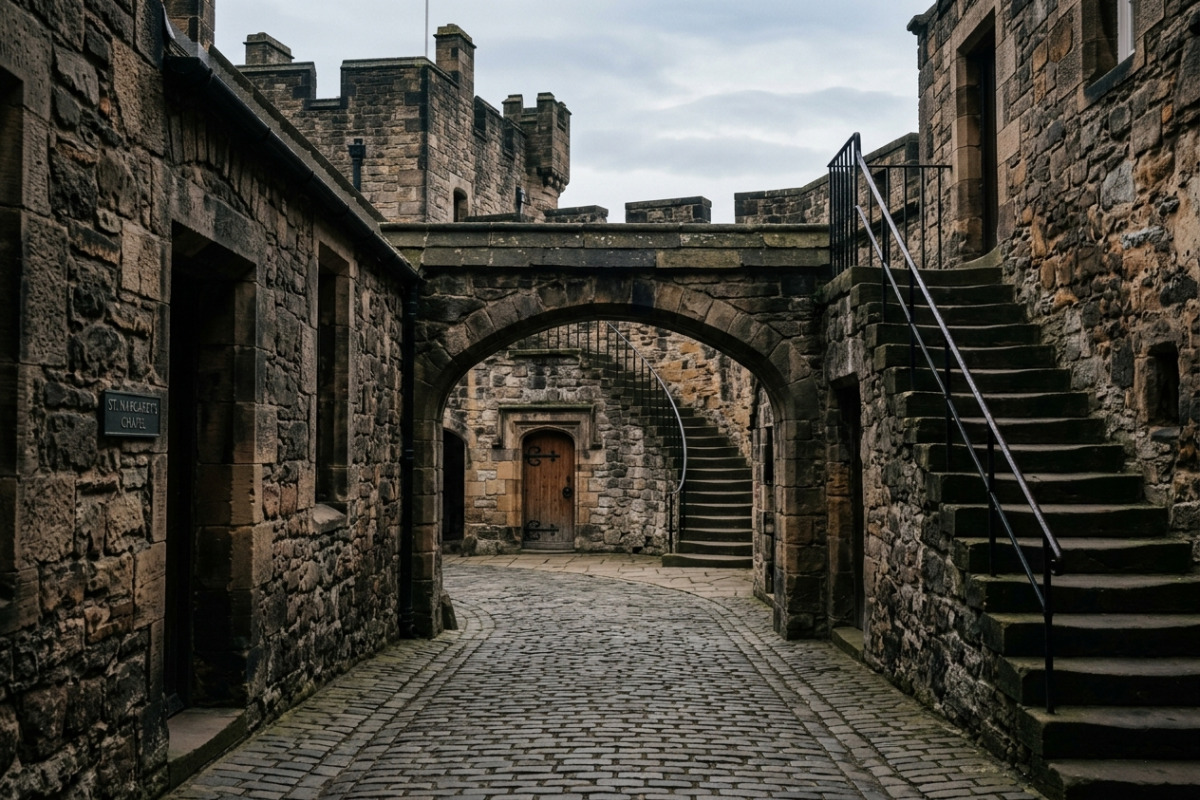
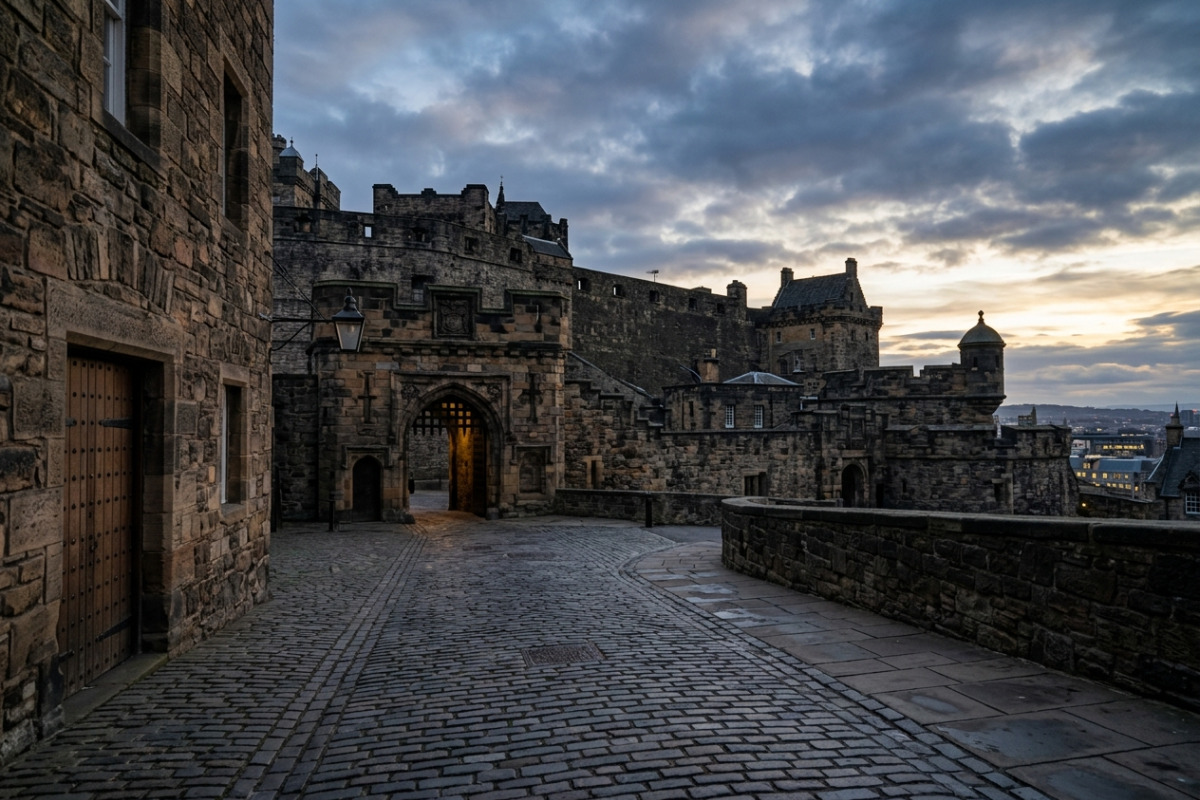
Most visitors enter the castle through the main gate, passing under the statues of Bruce and Wallace. However, for a sense of the castle’s ancient topography, one should look to the Lang Stairs. These steep, narrow steps were once the primary route into the castle before the modern road was constructed. They follow the natural cleft in the rock and represent the most vulnerable point of the fortress.
The hidden treasure here is the story of the 1314 surprise attack. During the Wars of Scottish Independence, Thomas Randolph, the Earl of Moray, led a small group of men who scaled the vertical cliffs of Castle Rock under the cover of darkness. They avoided the main gates and took the garrison by surprise. Standing at the top of the Lang Stairs and looking down the precipitous drop, you gain a visceral appreciation for the sheer daring of that climb—a feat of military history that the modern paved paths fail to convey.
Architectural Enigmas: The Forewell and the Auld Alliance
Deep within the castle's inner ward lies the Forewell, the castle’s primary water source for centuries. While it looks like a simple hole in the ground, its depth—over 100 feet into the volcanic rock—is a testament to medieval engineering. During sieges, the Forewell was the castle’s most precious asset; its failure often led to immediate surrender. The masonry surrounding the well still bears the marks of different eras, showing how the castle was repaired and reinforced after every conflict.
Furthermore, keep an eye out for the subtle architectural symbols of the 'Auld Alliance' between Scotland and France. In the stonework of the Great Hall and the Royal Palace, you can find the fleur-de-lis intertwined with the Scottish thistle. These small, carved details are hidden in plain sight, representing centuries of diplomatic maneuvering and cultural exchange that shaped the Scottish nation. They serve as a reminder that Edinburgh Castle was not just a military outpost, but a sophisticated center of European politics.
Planning Your Discovery
To truly uncover these treasures, you must change your pace. Avoid the urge to follow the largest crowds and instead, look for the smaller doorways, the lower vaults, and the intricate carvings on the window sills. Many of these details are not highlighted on standard tourist maps, requiring a curious mind and a sharp eye. Whether it is the rhythmic ticking of the mechanism behind the One O'Clock Gun or the silent shadows of the David’s Tower ruins, the hidden treasures of Edinburgh Castle are what transform a simple visit into a profound journey through time. Plan your visit with an emphasis on these obscure details, and you will leave with a far richer understanding of why this rock has been the heart of Scotland for over a thousand years.
Enjoyed this article?
Share it with friends and fellow castle enthusiasts.