Uncover the profound historical layers of Edinburgh Castle, from its volcanic origins and royal sieges to the architectural evolution of Scotland’s most iconic fortress.
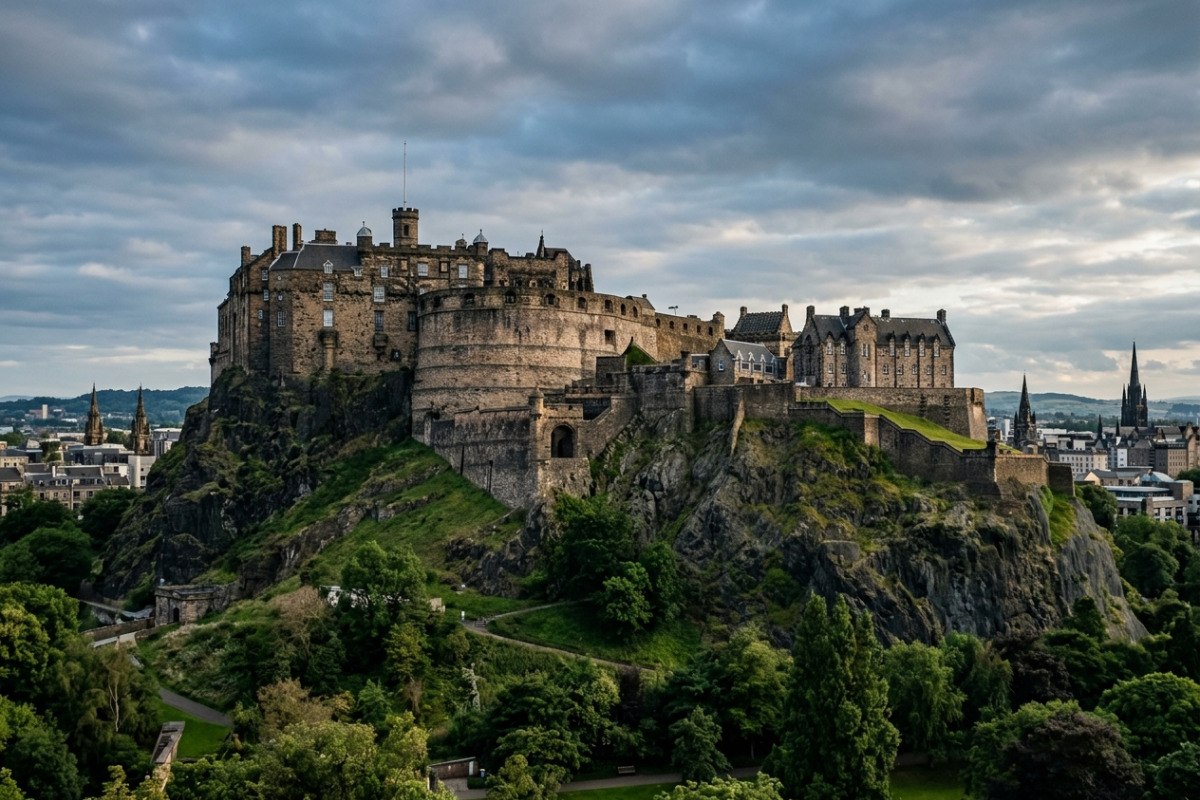
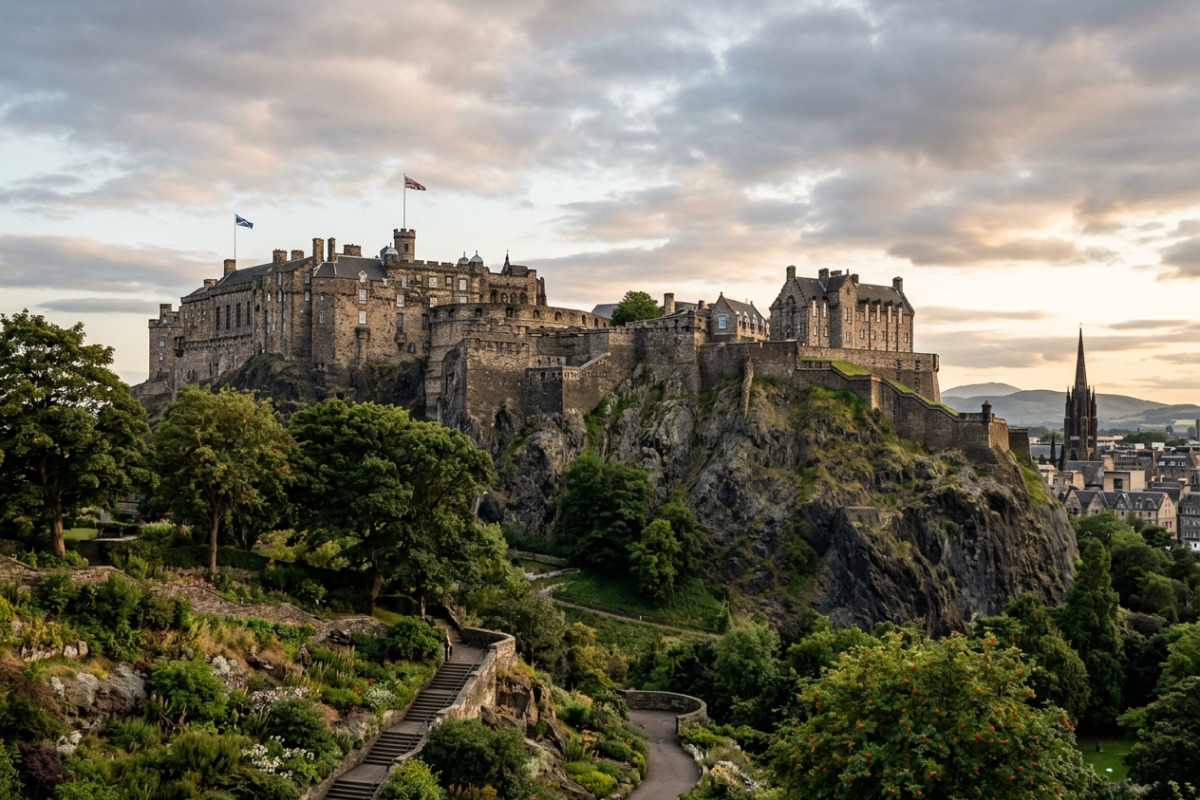
Edinburgh Castle stands as a monumental emblem of Scotland's storied past, captivating visitors with its dramatic views and rich history. Perched atop the formidable Castle Rock—a volcanic plug that has loomed over the Lothian plains for millions of years—this iconic fortress is more than just a tourist destination; it is the heartbeat of a nation. As you approach the massive portcullis gates, the whispers of centuries past beckon you to explore the depths of a site that has been a royal residence, a military garrison, and a state prison. This exploration delves into the intricate layers of Edinburgh Castle’s history, revealing the strategic brilliance and the human dramas that have defined it.
The Geological and Prehistoric Foundations
The story of Edinburgh Castle does not begin with stone walls, but with fire and ice. The Castle Rock was formed approximately 350 million years ago during the Carboniferous period, when a volcanic eruption left behind a hard basalt plug. Subsequent glacial movements eroded the surrounding softer rock, creating a 'crag and tail' formation that provided a natural, defensible high point. Archaeologists have found evidence of human habitation on the rock dating back to the Iron Age, around 800 BC. The ancient Britons knew it as 'Din Eidyn' (The Stronghold of Eidyn), a name that would eventually evolve into Edinburgh.
By the time the Romans arrived in the 1st century AD, the rock was likely a significant hillfort for the Votadini tribe. While the Romans themselves did not occupy the rock permanently, their presence in the region influenced the local power structures. The transition from a tribal hillfort to a medieval royal stronghold was a gradual process of fortification, as the strategic value of controlling the Firth of Forth and the surrounding lowlands became undeniable to the burgeoning Scottish monarchy.
The Medieval Stronghold and the Wars of Independence
Dating back in its current stone form to at least the 12th century, Edinburgh Castle became a focal point of Scottish sovereignty under King David I. It was during this era that the castle began to resemble the complex fortress we recognize today. However, its prominence made it a primary target during the Wars of Scottish Independence. The castle changed hands between the Scots and the English multiple times, symbolizing the tug-of-war for Scotland's soul.
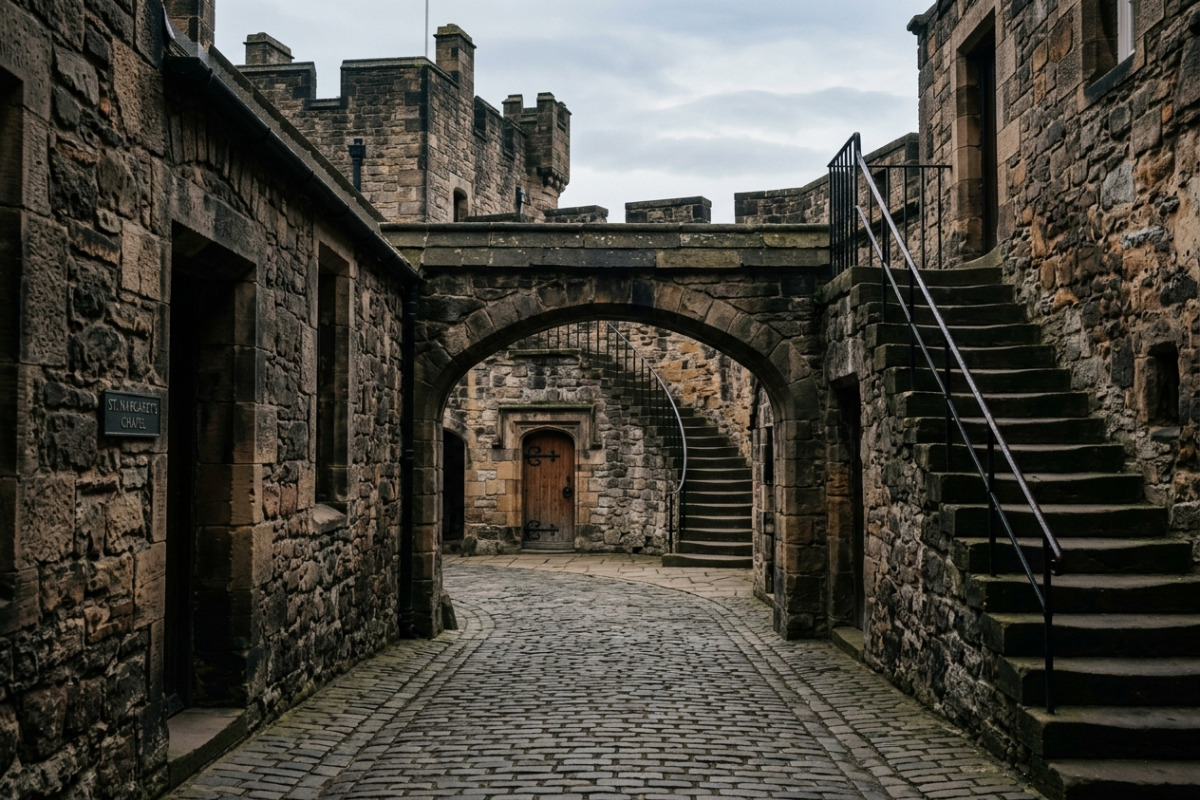
One of the most daring exploits in the castle's history occurred in 1314. Under the orders of Robert the Bruce, Thomas Randolph, the Earl of Moray, led a surprise night-time raid. A small group of men scaled the treacherous north cliffs of the Castle Rock—a feat deemed impossible by the English defenders—and recaptured the fortress. To prevent it from falling back into English hands, Robert the Bruce ordered the castle’s defenses to be slighted (destroyed), leaving only the tiny St. Margaret’s Chapel standing. This act of tactical destruction highlights the castle’s role not just as a prize to be won, but as a strategic asset that could be sacrificed for the greater cause of independence.
Architectural Evolution: From Gothic Grandeur to Military Might
The architecture of Edinburgh Castle is a living record of Scotland's technological and aesthetic evolution. As you navigate the winding cobbles of the Middle Ward, the transition from medieval defense to Renaissance luxury becomes apparent. The Great Hall, commissioned by King James IV and completed around 1511, is a masterpiece of medieval design. Its magnificent hammerbeam roof, featuring carved corbels and intricate timber work, reflects the wealth and cultural aspirations of the Scottish court before the tragic defeat at Flodden Field.
In contrast to the ceremonial Great Hall stands the Half Moon Battery. Constructed following the devastating 'Lang Siege' of 1571–1573, this massive curved wall was designed to house heavy artillery, replacing the older, more vulnerable square towers. This shift in architecture marks the transition from the era of knights and bows to the age of gunpowder and cannons. Every stone in the battery tells a story of survival and adaptation, showing how the castle evolved to withstand the increasingly powerful siege engines of the early modern period.
The Honours of Scotland and the Stone of Destiny
No journey through the castle’s history is complete without acknowledging the 'Honours of Scotland'—the oldest crown jewels in Britain. Comprising the Crown, Sceptre, and Sword of State, these regalia were first used together for the coronation of Mary, Queen of Scots, in 1543. Their survival is a saga in itself; they were hidden from Oliver Cromwell’s forces during the Interregnum and later locked away in a chest in the Crown Room for over a century after the Act of Union in 1707.
It was the famous novelist Sir Walter Scott who, in 1818, led a search to rediscover these lost treasures. Alongside the Honours sits the Stone of Destiny, an ancient symbol of Scottish monarchy that was forcibly taken to Westminster Abbey in 1296 and only returned to Scotland in 1996. These artifacts are not merely museum pieces; they are the physical manifestations of Scottish identity and the enduring legacy of the Stuart and Tudor dynasties that once walked these halls.
The Military Garrison and the Jacobite Risings
As the royal court moved to London following the Union of the Crowns in 1603, Edinburgh Castle’s role shifted primarily toward that of a military garrison and prison. During the Jacobite Risings of the 18th century, the castle remained a staunch Hanoverian stronghold. In 1745, despite the Jacobite army under Bonnie Prince Charlie capturing the city of Edinburgh, they were unable to take the castle itself. The fortress’s impenetrable nature proved decisive, as the garrison held out, denying the rebels the symbolic and strategic victory they desperately needed.
This period also saw the expansion of the barracks and the construction of the Queen Anne Building. The castle became a place of confinement for prisoners of war from various global conflicts, including the Seven Years' War and the American War of Independence. The graffiti carved into the wooden doors of the vaults by these prisoners offers a poignant, human connection to the global reach of the British Empire and the castle's role as a silent witness to international history.
The Legacy of St. Margaret’s Chapel and the War Memorial
Within the castle walls, two structures offer a more somber and reflective perspective on history. St. Margaret's Chapel, the oldest surviving building in Edinburgh, dates to the early 12th century. Built by King David I in memory of his mother, Queen Margaret, its simple Romanesque arches and quiet atmosphere provide a stark contrast to the surrounding military fortifications. It survived the 1314 destruction of the castle because of its sacred status, remaining a place of pilgrimage for centuries.
On the opposite side of Crown Square lies the Scottish National War Memorial, opened in 1927. Occupying the site of a former barracks, this building serves as a tribute to the Scots who fell in the World Wars and subsequent conflicts. The artistry within—from the stained glass to the bronze friezes—transforms the castle from a site of historical conflict into a place of national mourning and remembrance. This duality of the castle—as both a weapon of war and a sanctuary of peace—is what makes its history so uniquely compelling.
Conclusion: The Living Monument
Edinburgh Castle is far more than a collection of historic buildings; it is a living monument to the resilience and identity of the Scottish people. By exploring its architectural marvels—from the Iron Age foundations to the 20th-century memorials—you connect with a narrative that continues to shape modern Scotland. Every stone tells a story of defiance, every battery a tale of defense, and every hall a whisper of royal ceremony. To walk through its gates is to step through time, embracing a legacy that remains as firm and unyielding as the volcanic rock upon which it stands.
Enjoyed this article?
Share it with friends and fellow castle enthusiasts.